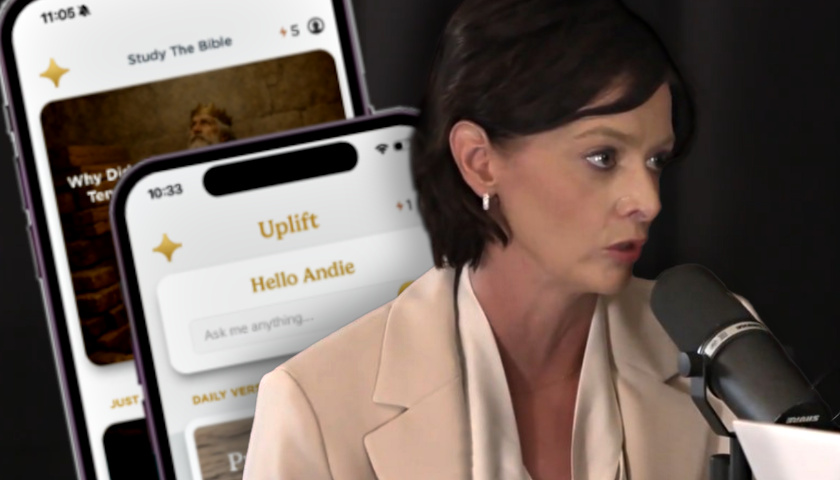

Williamson County School Board Vice Chair Dr. Claire Reeves, who holds a Ph.D. in cellular and molecular biology and previously worked in biomedical research, is calling for stronger protections for children online following Tennessee’s $17.1 billion settlement with Meta.
Reeves discussed the settlement during an appearance Thursday on The Michael Patrick Leahy Show, where she also detailed her scientific career that includes working at Celera Genomics during the race to sequence the human genome, conducting research at the National Institutes of Health, and earning her doctorate from Columbia University.
“I was always interested in science, so I was a biology major, and then I went and I worked at a biotech company that was sequencing the human genome at the time,” Reeves said.
At Columbia, Reeves conducted research involving cancer and angiogenesis, the formation of blood vessels. She said her doctoral research focused on a protein known as anthrax toxin receptor two and its normal function in the body.
Her scientific background eventually led her into science writing before she moved into her current career in education and her role on the Williamson County School Board.
Turning to Tennessee’s settlement with Meta, Reeves said Attorney General Jonathan Skrmetti deserves credit for securing both financial penalties and binding changes to Meta’s platforms.
“We are very fortunate with our attorney general in Tennessee, Jonathan Skrmetti,” Reeves said. “He led this effort along with 46 other attorney generals. They sued Meta, and they walked away with a huge settlement.”
The settlement, announced Wednesday after Tennessee’s lawsuit against Meta had proceeded to trial, resolves claims brought by 47 states and several U.S. territories alleging that Meta designed Instagram with addictive features and exposed children and teens to potential harms.
Tennessee is set to receive nearly $752 million for its newly created Children’s Digital Protection Fund, while Meta will implement new safeguards including two-hour daily limits for young users, overnight access restrictions, stronger age verification and parental controls, and limits on certain features such as beauty filters and visible “like” counts.
“[Children who open Instagram accounts] are going to now get break reminders, and they’re going to not receive notifications during the school day, and they’re not gonna have access to the beauty filters and things that could damage their self-esteem,” Reeves said.
While calling the settlement “huge,” Reeves went on to argue that Meta should not be the only social media company facing pressure to make substantial changes.
In a commentary piece published in The Tennessee Star, Reeves said other major platforms, including YouTube, TikTok, and Snapchat, should implement comparable safeguards rather than relying on voluntary measures.
Reeves also endorsed federal legislation aimed at strengthening protections for children online, including U.S. Senator Marsha Blackburn’s (R-TN) Kids Online Safety Act and the App Store Accountability Act.
The App Store Accountability Act, Reeves explained, would require apps distributed through Apple and Google’s app stores to verify users’ ages.
“It will require any app in the app, in the Google or Apple App Stores, to verify a kid’s age,” Reeves said. “So it’s creating true informed consent for parents.”
Reeves also supports keeping children off social media until at least age 16.
“I think the data is pretty clear on how damaging these apps are,” Reeves said.
She also backed Blackburn’s “bell to bell, no cell” proposal, which would establish a statewide standard prohibiting students from using cell phones throughout the entire school day. The proposal would go beyond Tennessee’s current law, which requires districts to restrict wireless devices during instructional time but allows individual districts to adopt stricter policies.
Reeves said she “fully supports” Blackburn’s proposal.
In her commentary, Reeves urged parents to take action even as lawmakers and courts address social media companies.
“Lawsuits and legislation will keep chipping away at these platforms’ worst defaults, but no regulation will ever move faster or protect our kids more reliably than a parent who simply says ‘not yet,’” Reeves wrote.
Watch:
Tune in now to The Michael Patrick Leahy Show – your AMERICA FIRST news talk!
– Watch LIVE here on X
– Watch LIVE on YouTube / Rumble / Roku / AppleTV
– Listen on Spotify
– Listen on WENO AM760 in Nashville
– Read more at @TheTNStarhttps://t.co/1Yj2K3S0dY— Michael Patrick Leahy (@michaelpleahy) August 27, 2026
– – –
Kaitlin Housler is a reporter at The Tennessee Star and The Star News Network.