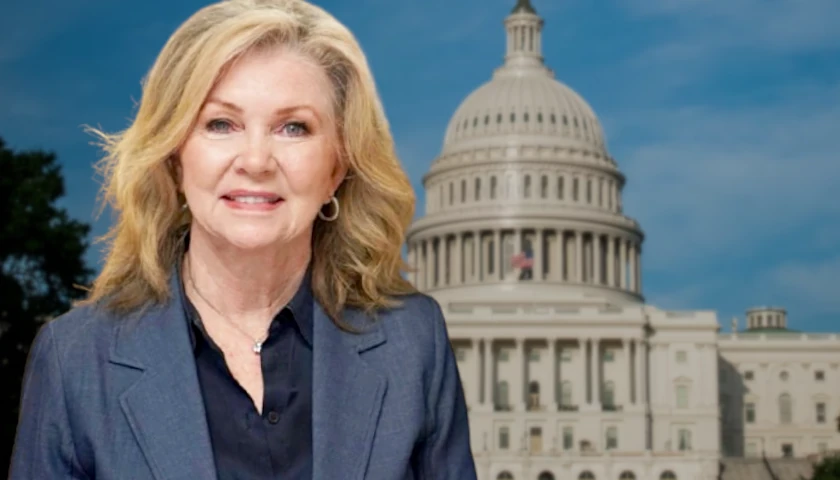
Senator Marsha Blackburn (R-TN) revealed a bill last week that seeks to codify President Donald Trump’s executive order on artificial intelligence (AI).
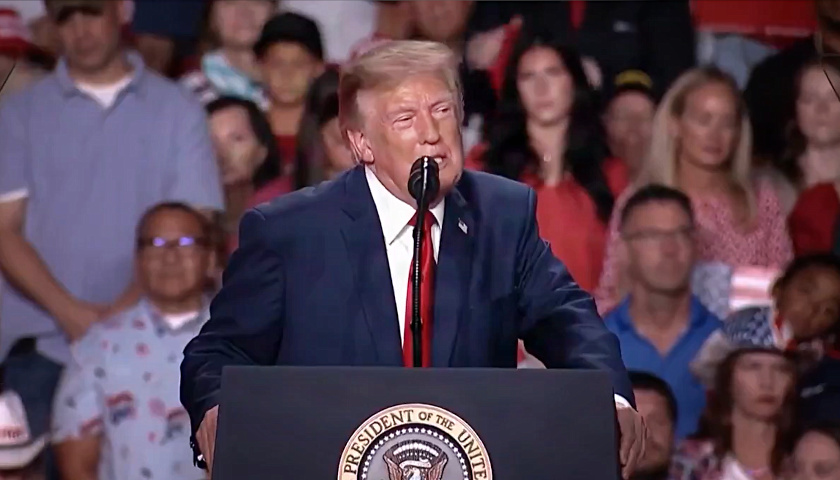
Trump unveiled an executive order earlier in December that promotes America’s “national and economic security and dominance across many domains.”
“United States AI companies must be free to innovate without cumbersome regulation. But excessive State regulation thwarts this imperative,” the Ensuring a National Policy Framework for AI executive order says.
Blackburn’s bill, called The Republic Unifying Meritocratic Performance Advancing Machine Intelligence by Eliminating Regulatory Interstate Chaos Across American Industry (Trump America AI Act), seeks to put this executive order into law.
Blackburn said she would be introducing this bill proposal next year. She added that the bill creates a “federal rulebook for AI to protect children, creators, conservatives, and communities across the country and ensure America triumphs over foreign adversaries in the global race for AI dominance.”
For children, the bill proposal says online platforms, including social media ones, need to develop tools that protect minors from sex trafficking, suicide, and other abuses. Furthermore, the bill would require these platforms to safeguard minors’ data, create a way for parental oversight, and provide a way for platforms to be notified about harmful content towards minors.
The bill proposal seeks to amend Section 230 to incentivize the development and use of technology that allows parents to block their children’s access to inappropriate material.
Section 230 gives “limited federal immunity to providers and users of interactive computer services.”
Blackburn’s bill would also mandate that AI platforms provide risk assessments of how algorithmic systems, engagement mechanics, and data practices factor into psychological, physical, financial, and exploitative harms.
To help protect creators, the Trump America AI Act would establish a federal right to sue companies that use their data for AI training or AI models without their consent.
Companies or people would be held responsible if they use an unapproved digital replica on someone in a performance, the bill proposal says.
AI systems that create derivative works without proper approval will not be considered to have copyright protection, the Trump America AI Act states. Examples of derivative works include “translations, musical arrangements, motion picture versions of literary material or plays, art reproductions, abridgments, and condensations of preexisting works,” according to the United States Copyright Office.
On top of all this, the bill proposal seeks to allow nondiscriminatory access to limited content.
In an effort to protect AI systems and Big Tech from discriminating against conservatives, the bill proposal would make these entities undergo bias evaluations to prevent discrimination based on protected characteristics, such as political affiliation.
The bill proposal would require federal agencies, corporations, AI developers, and others to provide AI ethics training to personnel.
As AI continues to impact the job market, the Trump America AI Act would require specific companies and federal agencies to report to the Department of Labor (DOL) on AI-related layoffs and job displacements. This would be done every four months.
The bill proposal would require the DOL to analyze the effects of AI on jobs and produce a report for Congress and the American public.
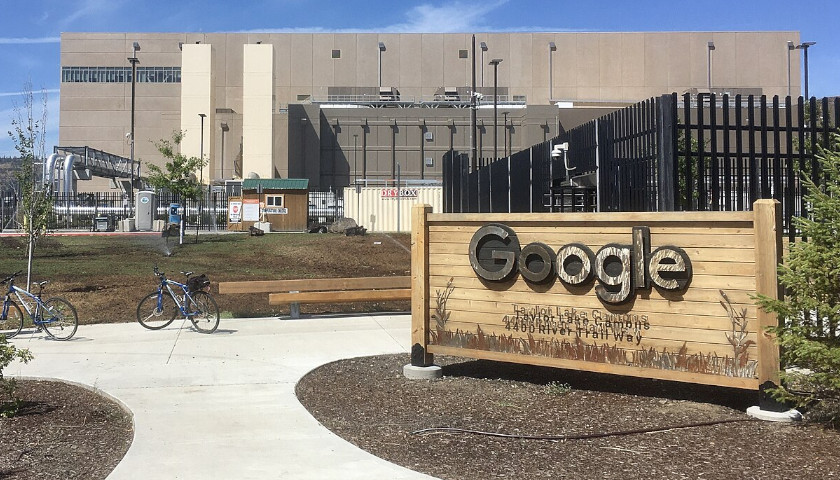
Regarding data centers, the Trump America AI Act requires these operators to pay for all energy and water infrastructure costs to operate their facilities, including construction, maintenance and upgrades.
– – –
Zachery Schmidt is the digital editor of The Star News Network. Email tips to Zachery at [email protected].
Photo “Marsha Blackburn” by Marsha Blackburn.