by Phill Kline
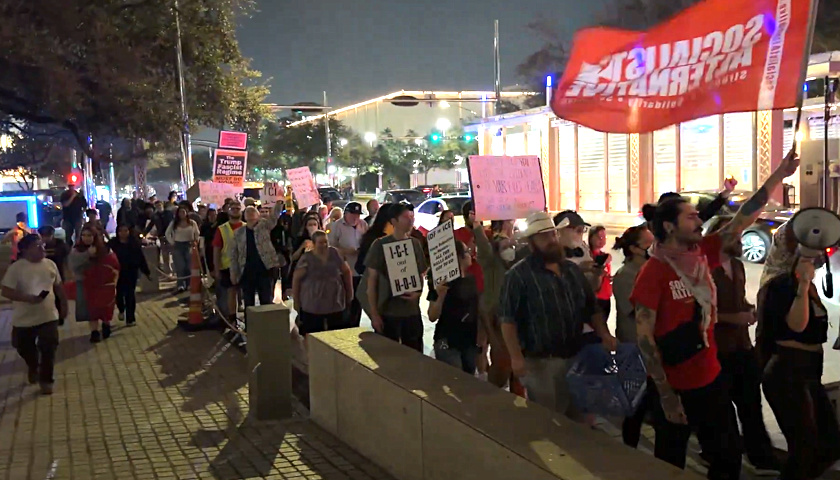
We live in an era where cultural judgment is immediate, often fomented by failing media, addictive algorithms, click-bait incentives, and well-funded “nonprofits” armed with pre-printed signs and paid protesters.
A two-minute clip circulates, a verdict is declared, and reputations are shredded before investigators have even assembled the facts. Cancel culture and media-driven narratives trade nuance for clicks, converting ambiguity into outrage and turning people into political ammunition. The tragic shooting of Renee Nicole Good in Minneapolis stands as yet another example of this cultural and media failure in the pursuit of truth.
If we truly value justice—and if we aim to resist this deliberate campaign to divide us—we must reject the rush and demand time to uncover the truth, abiding by the core principles that forged American exceptionalism: seeking facts before judgment and safeguarding individual dignity against collective manipulation.
Multiple publicly released videos of the Minneapolis encounter—body-cam, bystander footage, and an officer’s phone clip—allow anyone to replay the scene until it feels obvious. Frame-by-frame review places the vehicle’s steering motion at roughly one second before the first shot.
After accounting for human reaction time and weapon presentation, the officer’s remaining conscious decision window is approximately 0.1–0.3 seconds (100–300 ms). That is the factual hinge on which fair judgment must turn: a few tenths of a second, not minutes of deliberation. These are the kinds of high-stakes, compressed moments officers face, often after prolonged engagements in tense situations—like a driver barricading the road and defying commands.
Picture a three-year-old teetering on a curb while a car rushes by. The child’s tiny forward motion is sudden and small; you reach before your mind finishes the sentence to save the child. That initial reach—reflexive and trained—happens in one to three tenths of a second.
Or imagine driving on a wet road when the car ahead slams its brakes: your foot hits the pedal almost before you can think “stop.” In both cases, you do not calmly weigh options; you react.
Both of these hypothetical moments, based on a review of the videos, approximate the time the officer had to act to Ms. Good’s actions.
Those ordinary moments are not metaphors to excuse wrongdoing. They are reminders that, in acute danger, human beings operate by reflex and training, not extended moral calculus.
Even when timing is understood, our minds remain vulnerable to a second distortion.
Although a camera was there, we were not. And this presents another bias – outcome bias – which is being exploited by our culture’s manufacturers of outrage.
When a person dies, observers instinctively overweight that tragic outcome and assign blame.
This is not merely emotional; it is cognitive. Outcome bias and what philosophers call “moral luck” make the same prior behavior look far worse when the result is catastrophic.
A fatal outcome creates a gravitational pull in public judgment: people search for proximate causes and often fix on the most visible actor. Observers then conflate result with intent, assuming the worst about motives because the worst has occurred. This is a distortion.
Clearly, from what we know, Ms. Good did not deserve to die from her actions, but that is not what we are intending to discern—we are trying to determine whether the officer was justified in his reaction during that one-tenth to three-tenths of a second.
The intent of Ms. Good should only factor into judging an officer’s split-second response if her intent was non-threatening AND reasonably discernible from her conduct before shots were fired.
If her intent was ambiguous, the officer’s decision must be evaluated against what was knowable in the moment, not against the tragic result that followed.
To the officer, I am certain the threat of a moving car aimed at him—immediately after Ms. Good’s wife yelled “drive”—loomed far larger than any nuanced expression on her face as she accelerated in his direction.
But such is America’s social-media culture. Our public rituals reward speed over rigor in the political scramble to capture a “narrative,” with truth as the inevitable casualty. Social platforms amplify outrage, cable networks compress complexity into sound bites, and pundits issue definitive moral verdicts before timelines are synchronized or basic facts are established.
This chaos is not organic. It is engineered.
External interests, both foreign and domestic, often masquerading as “nonprofits,” actively exploit these fractures to divide American culture. They weaponize cancel culture, seed social media with inflammatory content, fund paid protesters to escalate tensions, and rely on the dominant media’s institutional laxity to amplify the narrative.
In our victim-centric culture, where personal grievances are elevated to sacred status, these actors identify vulnerable individuals and transform them into pawns: mere tools in larger geopolitical or ideological battles.
What begins as a legitimate complaint or a tragic incident gets hijacked, converting the individual from an end in themselves—worthy of dignity and fair process—into cannon fodder for broader disruption. This betrayal undermines American individualism, our bulwark against overreaching cultural and governmental power.
The result is a culture of division and cancellation: careers, reputations, and civic trust are shredded in hours based on partial views and emotional certainty. That rush is corrosive—it substitutes spectacle for investigation, pressures institutions to respond performatively rather than transparently, and elevates the power of manipulators to divide us while eroding the principles that limit such power.
This column, therefore, is not a call to shield the powerful; it is a demand that accountability be rooted in evidence, not in the appetite for theatrical condemnation. By rushing to judgment, we play right into the hands of those who seek to erode our unity, using our own divisions against us.
If we want justice rather than theater, we must change how we respond. We must first be willing to defend the freedoms of those with whom we disagree by investing in the pursuit of truth.
Here, we should insist on context: time-synchronized multi-angle footage, forensic timelines, and an account of what the person on the scene actually knew before the critical cue.
Second, name the cognitive limits at play and educate audiences briefly about hindsight and outcome bias so snap condemnations are less likely.
Third, demand process: independent review, transparent timelines, and public explanation build trust far more effectively than partisan declarations. Recognizing how external forces manipulate these moments—through amplified grievances and orchestrated outrage—helps us resist becoming unwitting participants in their games.
The image of a toddler slipping toward a busy street is not a rhetorical trick to excuse wrongdoing. It is a visceral reminder that human beings are not deliberative machines in the face of sudden danger. When we rush to moral certainty after watching a clip, we mistake narrative clarity for factual completeness.
Most significantly, if we are to be a nation that prizes justice, we must reclaim a critical component of American exceptionalism: the commitment to seek truth before judgment.
Demanding the time to understand the truth is not timidity; it is fidelity to the principles that make justice meaningful and America resilient against those who would divide us.
– – –
Phill Kline is a former Attorney General, state legislator, and local prosecutor in Kansas, the Director of the Amistad Project, a professor at Liberty University School of Law, and a frequent media commentator on legal and cultural events.
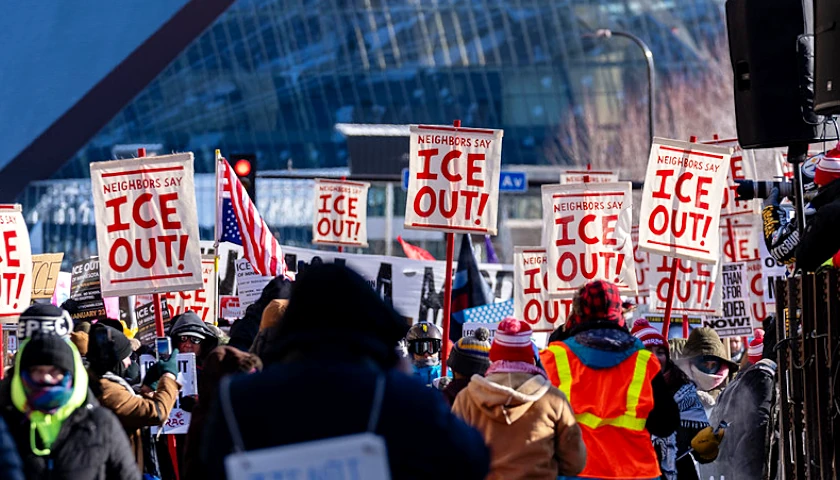
Image “Anti Ice Protest” by Ethan Buchanan / Next-Gen Report.