Commentary: A New Direction in Civil Rights Policy

work office

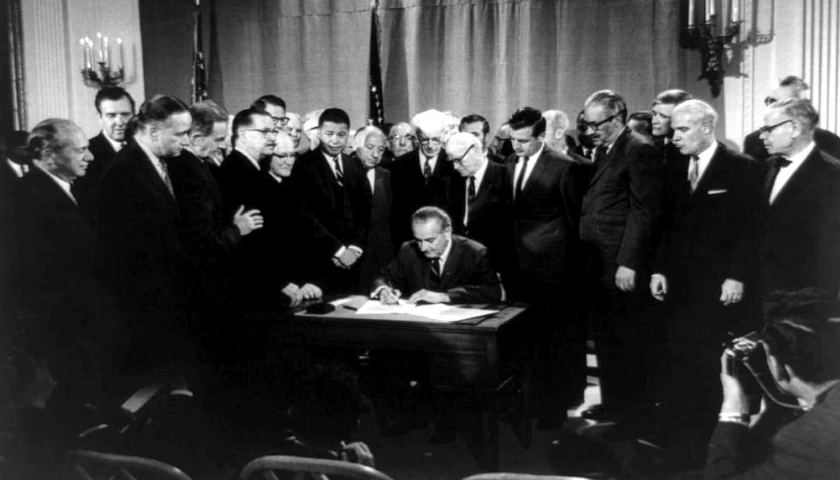
The Trump administration is restoring the core value of equal opportunity to civil rights enforcement. It is eviscerating the race-baiting, intersectional policies of the Biden and Obama administrations, and giving substance to the Supreme Court’s unanimous decision in Ames v. Ohio Department of Youth Services (2025) that whites, men, and heterosexuals are not held to a higher standard in discrimination cases.

This is a time for rejoicing, tempered by concern that the administration will not have time to complete its work, and that its reliance on executive orders, rather than legislation and consent decrees, will allow the next Democratic president to rip asunder President Trump’s laudable accomplishments.

Read the full story

Commentary: Hiding Star Researcher Ralph Baric’s Ties to Global Pandemic

Ralph Baric

In March 2020, a couple of months after the Centers for Disease Control and Prevention reported the first confirmed case of COVID-19 in the United States, editors at the journal Nature Medicine appended a note to a coronavirus study it had published five years prior. “We are aware that this article is being used as the basis for unverified theories that the novel coronavirus causing COVID-19 was engineered,” the journal editors wrote. “There is no evidence that this is true; scientists believe that an animal is the most likely source of the coronavirus.”

The prestigious journal appears to have taken this extraordinary action for two reasons. First, the study described cutting-edge gain-of-function research that mixed different viruses together to create a man-made chimera, or hybrid of both viruses – experiments some suspected were the origin of the SARS-CoV-2 virus that caused the pandemic. Second, the study’s authors were Shi Zengli of the Wuhan Institute of Virology – a research lab in the city that was ground zero for the pandemic – and Ralph Baric, the world’s leading expert on coronaviruses, of the University of North Carolina.

Read the full story

Commentary: The Truth About Immigration from the Global South

new citizens

For decades, discussions surrounding mass immigration into Western nations have largely been confined to two unproductive viewpoints. One perspective, which views culture as a superficial element and asserts the fundamental similarity of all human beings, suggests that immigrants primarily require sufficient time and opportunities to integrate. Conversely, the other attributes assimilation challenges to cultural values, patriarchal attitudes, or religious conservatism. Both approaches, however, exhibit an intellectual reluctance to delve deeper. What remains conspicuously absent from the prevailing discourse is an understanding rooted in developmental psychology and civilization theory. This framework offers significant explanatory power while avoiding genetic determinism and simplistic cultural explanations, yet it still presents genuinely uncomfortable truths.

A central insight, systematically elaborated by sociologist Georg W. Oesterdiekhoff, who leans upon Norbert Elias’s civilization theory and Jean Piaget’s developmental psychology, posits that human societies evolve through distinct stages of psychological and institutional development. Piaget identified the formal operational stage as the pinnacle of cognitive development, typically emerging in adolescence, in which individuals become capable of abstract reasoning, hypothetical thinking, and evaluating situations according to universal principles rather than immediate, concrete experience. Oesterdiekhoff’s provocative claim is that premodern peoples, as a general rule, did not reach this stage—remaining, in cognitive terms, at earlier levels of development characterized by magical thinking, egocentrism, and an inability to reason systematically beyond the tangible and the familiar. This assertion has nothing to do with race or immutable biological traits.

Read the full story

Commentary: RFK Jr.’s Call For Early Alzheimer’s Screening Could Stop a Fiscal Crisis

RFK

Health and Human Services Secretary Robert F. Kennedy Jr. recently announced that “it is regulatory malpractice that we don’t have early [Alzheimer’s] screening already,” saying “we now know that early treatment of Alzheimer’s can postpone its onset.”

Kennedy echoes a sentiment that millions of Americans already feel: the healthcare system should be more concerned with prevention and early intervention than late-stage crisis care. His statement should serve as a wake-up call for doctors, policymakers and anyone concerned for the country’s long-term fiscal health.

Read the full story

Commentary: Holding the SPLC Accountable

FBI and SPLC

I hope you’ll forgive me this unorthodoxy, but I’m going to start today with a couple of long quotations from another author, Nathan J. Robinson. The first quote is about the Southern Poverty Law Center (SPLC), and the second is specifically about the SPLC’s much-ballyhooed “Hate Map.” I swear, there’s a point to all of this.

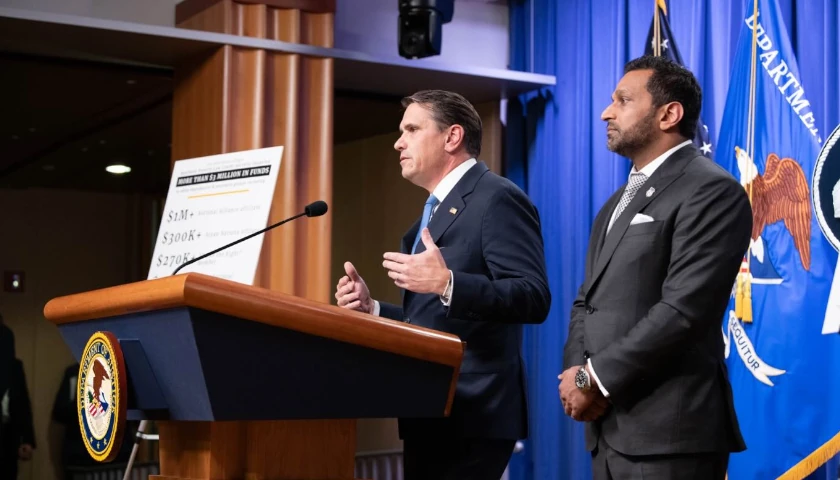
The Southern Poverty Law Center perfectly shows social change done wrong. It was a top-down organization controlled by an incompetent and venal leadership. It was hypocritical in the extreme, preaching anti-racism while fostering a racist internal culture and being led by men whose own commitment to equality was questionable. It didn’t care about listening to and incorporating the viewpoints of the people it was supposed to serve. It was obscenely rich in a time of terrible poverty and squandered much of its considerable wealth. Finally, it picked the wrong political targets and focused on symbolic over substantive change.

Read the full story

Commentary: Mainstreaming Violence Against a President

anti-Trump

At the White House Correspondents’ Dinner, Donald Trump was the target of yet a third assassination attempt—this time in full view of the Washington press corps.

The event was presented as a spirited night with Trump. After 11 years of avoiding the predominantly left-wing media event, he decided to revisit the dinner. He anticipated that he would be the object of ridicule inside the hall—and that he might see possible violence outside it.

Read the full story

Commentary: Lasting Pro-Life Solutions Require Federal Action

mifepristone

The widespread availability of abortion pills in the years since the Supreme Court’s 2022 Dobbs decision is one reason the total number of abortions has gone up since Roe v. Wade was overturned.

Not only have 12 statesopens in a new tab enshrined unlimited abortion into their state constitutions, but blue states are undermining lifesaving policies in pro-life states. They’re sending abortion pills to women in states that are trying to protect women, girls, and unborn children. They’re also shielding abortion pill providers from legal consequences thanks to laws that prohibit cooperating with pro-life states.

Read the full story

Commentary: Trump and Tennessee Republicans Delivering Affordable Energy

Donald Trump

The Trump administration and state leadership are working relentlessly to obtain private, federal and state investments and grants, as well as foreign direct investment in new enrichment technology, advanced nuclear power plants, and other innovations that are being built and deployed in partnership with the Tennessee Valley Authority and Oak Ridge National Laboratory (ORNL).

Read the full story

Commentary: Digital Communication Platforms Are Fueling Economic Growth—Let’s Not Lose Sight of That

Child learning online with mother next to boy

There’s a growing concern about how young people are experiencing the digital world. I have spoken out about this very issue myself. I’m relieved to see parents, educators, and especially policymakers are focusing on the risks and emerging challenges posed by artificial intelligence and social media addiction. These are serious issues, and they demand thoughtful, effective solutions.

Read the full story

Commentary: Bring Mars to the Stock Exchange

Mars

Following the moon landing, there was widespread belief that mankind would soon be going to Mars. The conquest of space had begun. In fact, just two weeks after the Apollo 11 mission returned from the moon, rocket pioneer Wernher von Braun, whose Saturn V rocket had taken humans to the moon, presented NASA’s Space Task Group with a detailed plan for a manned mission to Mars, targeting a launch in 1981. The then-head of NASA, Thomas O. Paine, even specified an exact date: 12 astronauts were to embark on a mission to Mars on November 12, 1981.

But things turned out differently. After only five more moon landings, the program was aborted—and Mars has yet to be reached. So, what happened? In short, NASA lost its way. Government-led spaceflight did not produce progress, but stagnation. Launch costs remained almost unchanged at a high level for decades. And there were no economic incentives to reach Mars.

Read the full story

Commentary: The Left’s Political Imagination

No Kings

It is difficult to determine whether the bizarro worldview of the current Democrat-media nexus can simply be attributed to either its generic Trump Derangement Syndrome or the attendant Wile E. Coyote/Roadrunner obsessive/compulsive disorder. But the crazy world of the Left increasingly bears scant resemblance to reality.

In this alternate universe, Eric Swalwell was a liberal icon and invaluable asset for years, though admittedly a bit randy and occasionally a serial sexual predator—a fact that the man himself made little effort to hide.

Read the full story

Commentary: Sanchez, Lenin, and Global Opposition to Trump

Pedro Sanchez

This past weekend, the self-proclaimed leaders of the global Left gathered in Barcelona to complain about Donald Trump and to declare that they are the real and legitimate representatives of the global masses, as they pushed back against the American president, his policies, and his purported destruction of the post-World War II institutions they profess to respect and cherish. The Global Progressive Mobilization conference, which drew some 6,000 elected representatives and activists from around the world, was organized and hosted by Spanish Prime Minister Pedro Sanchez, who has positioned himself as Trump’s chief international critic over the last several weeks. Sanchez said that he intends to turn Barcelona into a “hub of resistance” to Trump and the global Right and told the gathering that he will “twist the arm of the people who think they are completely untouchable.”

It is not entirely clear what Sanchez can actually do to twist anyone’s arm, literally or figuratively. As the prime minister of Spain, he oversees a lower-mid-tier EU economy and commands a lower-mid-tier global military. He talks a good game and proclaims to represent the morally superior political position, but his actions belie ulterior motives. He demands an end to American and Israeli tyranny and neocolonialism, even as he openly and unashamedly embraces ideas and partners that demonstrate, at best, an indifference to genuine tyrannical and colonial behavior.

Read the full story

Commentary: Mamdani’s ‘Free’ Grocery Stores Will Charge New Yorkers Twice Over

grocery store

New York City Mayor Zohran Mamdani intends to keep one of his most controversial campaign promises: city-owned grocery stores.

In his 100-day address on Sunday, he announced the city’s first socialist supermarket will be up and running in East Harlem in 2027. The only thing slower than Mamdani opening the store next year will be the checkout line once it finally opens—and that’s assuming the shelves aren’t empty.

Read the full story

Commentary: It’s Time to Rethink NATO

Trump and NATO

It has been nearly 80 years since the guns fell silent in World War II. In that long arc of peace, the United States helped rebuild a shattered Europe, deter Soviet expansion, and anchor what we now call the transatlantic alliance. Those were noble achievements. They mattered. They still echo in the prosperity and stability of the Western world today.

But history is not a life sentence. And gratitude, while virtuous, is not a strategy.

Read the full story

Commentary: Another Washington Overreach into the Workplace

Office Work

Ohio businesses are getting squeezed from every direction right now. Tariff uncertainty is disrupting supply chains. Input costs are up. The labor market hasn’t fully stabilized. Many of the business owners I know are just trying to keep their people employed and their doors open. That context matters when you look at what Congress is considering doing to them next.

The Faster Labor Contracts Act (H.R. 5408) would impose a federal timeline on first-contract collective bargaining negotiations. Bargaining must start within 10 days of a union election. If there is no agreement within 90 days, a government mediator steps in. If mediation fails, a government-appointed arbitration panel takes over and writes the contract—wages, benefits, working conditions, all of it. The employer has no further say. Neither do the workers.

Read the full story

Commentary: What AI Doesn’t Know, Matters

Dueling AI

Artificial intelligence has taken the wired world by storm, but the backlash came almost as fast. Progressives complain of job losses, environmentalists question the ecological impacts of huge data centers, and local activists are clamoring for assurances that household utility bills won’t skyrocket because of the centers’ voracious electricity requirements. Others simply worry that the technology will overwhelm humans’ ability to control it.

Read the full story

Commentary: America’s Nuclear Revival

nuclear plant

It has been more than seven years since President Donald Trump signed the Nuclear Energy Innovation and Modernization Act (NEIMA) into law – and it has taken all seven years (including four during the Biden Administration) for the Nuclear Regulatory Commission to issue a final rule implementing its provisions.

Even the Washington Post admits that the new Part 53 rules, intended to reduce review times from decades to 18 months or less, will make President Trump’s goal of revitalizing the U.S. nuclear energy industry more competitive – “to everyone’s benefit,” says the Post.

Read the full story

Commentary: America’s Fourth Coast Could Help Close the Shipbuilding Gap with China

ship building

In 2024, Beijing’s largest ship maker produced 250 ships. Combined, these ships could carry the weight of the total number of ships America has produced since World War II, according to the Center for Strategic and International Studies. If war were to break out in the Pacific the U.S. shipbuilding industry would not be able to repair and replace losses at the rate in which Chinese shipyards could.

Read the full story

Commentary: American Legacy Media Is Blind by Design

As Director of The Amistad Project, I have spent years examining how private money, political influence, and nonprofit networks intersect with election administration. That work has repeatedly brought me into direct contact with evidence that the infusion of private funds into the 2020 election was not a neutral act of civic charity but a targeted intervention designed to benefit one candidate—Mr. Biden.

Yet throughout this period, major media outlets insisted there was “no evidence” of such influence, and when the factual record became too substantial to ignore, they shifted to the equally misleading claim that there was “no proof.”

Read the full story

Commentary: State Lawmakers Nationwide Erect Firewalls Against Sharia Law

muslims

A quiet surge is reshaping American courts in states such as Georgia and Missouri to prevent the encroach of Sharia law.

State legislators are advancing “American Laws for American Courts” (ALAC) and related measures. These laws attempt to keep the U.S. and state constitutions as the sole legal authorities. The message to Americans is clear: no foreign codes and no parallel tribunals. This effort addresses real risks in family law, contracts, child custody, arbitration, and other legal conflicts.

Read the full story

Commentary: The Left Is Baffled and Still Repulsed by the White Working Class

construction workers

After failing to win Congress and the presidency in 2024, the Democrats conducted an internal postmortem of what went wrong. While they predictably did not divulge the full results, everyone knew what they had found.

Their obsessions with the low side of 30/70 issues had especially alienated Democrats from white middle- and working-class voters. Yet middle-class whites still comprise about 40–50 percent of the population and are perhaps overrepresented in voter turnout.

Read the full story

Commentary: NATO, Iran, and the Interests of Nations

Trump speaking

The longer the war with Iran drags on, the clearer it becomes that America’s allies have little interest in doing things that allies traditionally do. Some European leaders have merely said they will not participate in the war, that they have no interest in fighting Donald Trump’s battles. Others have taken concrete steps to hinder American efforts—notably, by denying American troops access to bases in their countries or denying them permission to fly over their airspace. Others still—namely, France’s Emmanuel Macron and Spain’s Pedro Sánchez—appear to have determined that their nation’s welfare no longer aligns with that of the United States, which is a legitimate position but hardly one that would define an “ally.”

The clearer it becomes that America’s longstanding erstwhile allies are unhappy with current arrangements, the more agitated President Trump’s domestic opponents—on the Left and the Right—grow. They are certain that Trump’s Middle East conflict is the straw that will break the back of the camel that is the post-World War II global order. He is an abomination, they insist, a simplistic fool who knows nothing about the history and grandeur of NATO, the importance of the trans-Atlantic partnership, or the bonds that tie “the West” together and make its preservation the central purpose of American foreign policy. He will destroy everything and leave the world and the nation worse off because of it.

Read the full story

Commentary: Easter Reveals the True Cost of Discipleship

Jesus Christ

For many people across the U.S., Easter Sunday means pastel-colored clothes, jelly beans, Cadbury eggs, or marshmallow Peeps. But Easter is far more than a cultural tradition or seasonal celebration. It is a declaration that should actually shape the way we live and has the power to transform lives: He is risen!

That truth, echoed by believers all around the world every Easter Sunday, is the foundation of a faith that calls us not to a life of comfort, but to a life of commitment.

Read the full story

Commentary: China Dominates the World’s Critical Minerals Production

mining

Critical minerals are mined all over the world but the majority of the supply ends up passing through China. For a broad range of key metals and minerals, China is either the largest miner, the dominant refiner, or both. This is true for rare earths, lithium, cobalt, graphite, nickel, and many other metals and minerals that are essential to defense, energy and high-tech applications. It is less about where ores are dug out of the ground and more about where they are turned into usable components. In other words, Chinese processing plants are essentially the gatekeepers of global supply.

Australia and South America host much of the world’s lithium, while Congo supplies the lion’s share of cobalt and copper. But the rocks themselves can’t become a battery or magnet without intensive downstream processing and refining. China built those downstream industries at scale over decades through state support and investment. The result is clear — China has effectively monopolized refining for most critical minerals while the rest of the world depends on it for much-needed supply. China is listed as the dominant refiner for 19 of 20 minerals analyzed by the IEA in their Global Critical Minerals Outlook for 2025, making up roughly 70% of the global processing capacity overall.

Read the full story

Commentary: The Iran War Doesn’t Mean ‘Renewables’ Will Replace Oil

Renewable energy

Right on schedule, the climate activists and their corporate backers are capitalizing on wartime fuel shortages to claim that now, finally, we can get serious about fighting climate change. On March 15, The New York Times weighed in with an article titled “How War in Iran Could Remake the Global Energy Landscape.” Claiming the oil crisis could “spur countries to invest in wind, solar, and other renewables,” the article quotes UN “Climate Chief” Simon Stiell, saying, “If there was ever a moment to accelerate that energy transition, this is the time.”

This is the same Simon Stiell who, in April 2024, claimed that the energy industry had only two years left “to save the world” by making “dramatic changes in the way it spews heat-trapping emissions, and it has even less time to act to get the finances behind such a massive shift.”

Read the full story

Commentary: Tennessee Bill Limits Government Access to Location History

person phone

Picture a Nashville warehouse supervisor. He is a churchgoer, soccer dad, and cardiology patient. No criminal record. No active investigation. But over the past two years, a private company’s license plate readers and cellular data aggregators have quietly assembled a record of nearly everywhere he’s been. Under current Tennessee law, a government official can query that record without asking a judge, establishing probable cause, or explaining why.

This is the current standard practice. House Bill 2608 and Senate Bill 2215, the Protecting Everyone from Excessive Police Surveillance (PEEPS) Act, would change it by requiring law enforcement to obtain a warrant before accessing Tennesseans’ historical location data. 

Read the full story

Commentary: California May Elect a GOP Governor, Potentially Impacting the Midterms

voting sign

With eight Democrats plunging forward in California’s crowded gubernatorial race, Republicans have a shot at occupying the governor’s seat for the first time since 2011 when former Gov. Arnold Schwarzenegger departed the governor’s mansion.

Should Republicans manage to take control of the governor’s mansion, it is possible Democrat turnout in down-ticket races will be slightly depressed, opening up an opportunity for Republicans to put up a fight in at least four competitive U.S. House seats and possibly lowering Democrat turnout in other races across the state too.  

Read the full story

Commentary: Oklahoma’s Digital Future Will Be Built on Affordable, Reliable, Clean Energy Security

data center

An increasingly familiar story is cropping up across rural America: communities wrestling with when, where, and how to welcome data centers. This month, The New York Times highlighted how Oklahoma in particular is no longer speculating about that challenge — but living it. 

“Nobody Owns Us: How Plans for a Google Data Center Roiled an Oklahoma Town,” went the headline.

Read the full story

Commentary: The Democrat Plan for 2029 Is Taking Shape

JB Pritzker

“There will be no post-presidential peace for Donald Trump,” boomed The New Republic last week.

In a lengthy piece on why the president should not expect to enjoy a restful retirement, Matt Ford laid out Donald Trump’s high crimes and misdemeanors—mostly high crimes—and accused him of having “excited domestic insurrections against us,” in the grave words of the Founding Fathers.

Read the full story
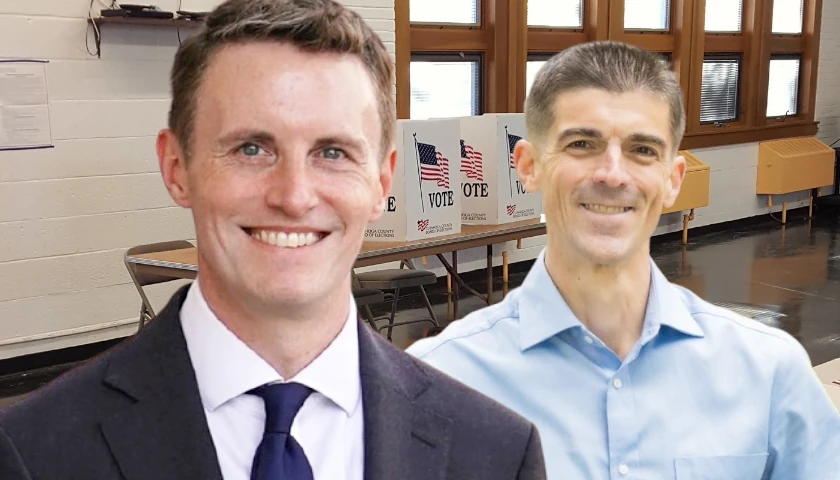
Commentary: Republicans’ Chances in 2026

election day

Election 2026: never has a midterm year been so important, so seminal, with so much riding on its outcome.

President Trump has unleashed one of the most consequential presidencies in American history. He has resisted the moderation of previous leaders, enacting a bold, aggressive agenda, recognizing the unique opportunities of a second-term president who can enact an aggressive policy change with the considerable support from the people.

Read the full story

Commentary: Cesar Chavez’s Legacy

Cesar Chavez

Cesar Chavez, founder of the United Farm Workers, eventually became the symbolic leader of the entire Mexican American community of the 1960s and 1970s. Indeed, he was eventually enshrined in the pantheon of modern leftist activists and civil rights leaders alongside Saul Alinsky, Martin Luther King Jr., and Betty Friedan. His Chavez Foundation today emphasizes Chavez’s saintlike status as “a genuinely religious and spiritual figure.” His Tehachapi redoubt remains a national monument.

In public, Chavez stressed nonstop his common-man roots, his strong Catholicism, and his devotion to wife and family, and thereby turned the struggle to provide a livable wage and humane working conditions for farm workers into a broader civil rights movement—led by the Christlike martyr Cesar Chavez himself. He carefully constructed an image of the long-suffering moralist, at odds with greedy capitalist “growers,” whom Chavez often publicly said he loathed.

Read the full story

Commentary: AI Innovation Cannot Come at the Expense of Our Children

kid phone

Artificial intelligence is often described as a breakthrough technology with enormous potential. In many cases, that promise is real. Innovation can improve lives, expand economic opportunity and help us address challenges that once seemed impossible to solve. But as we discuss the opportunities AI presents, we must also be honest about the risks that accompany it.

One system drawing increasing scrutiny is Grok, an artificial intelligence tool embedded within the social media platform X. Unlike traditional internet platforms that primarily host content created by their users, Grok generates images in response to prompts. Recent reporting suggests that the system has been used to create sexually explicit images of real people without their consent. Most troubling of all, this includes images involving minors.

Read the full story

Commentary: Protect Housing Market from Biden Era Credit Policies

home for sale

Investors joke that owing a bank $100,000 means the bank owns you, but owing $1 million means you own the bank because it can’t afford to let you default. Large loans pose big risks, requiring lenders to minimize exposure. A misguided, Biden-era proposal to weaken mortgage credit reporting—by allowing fewer than three credit bureau reports—threatens borrowers and the housing market. The FHFA should reject this change and uphold the tri-merge standard for responsible mortgage underwriting.

Housing loans account for as much as a third of many Americans’ budgets, making them the single largest expense for almost every borrower. Banks and other lenders want to make certain that a borrower can repay a loan before extending credit; it’s that simple.

Read the full story

Commentary: The Cost of Closing Pharmacies

When tragedy strikes or major policy changes are enacted, the first question I ask is simple: who bears the risk? In Tennessee, a proposed bill (SB2040/HB1959) that would force numerous pharmacies to close. Pharmacies are not interchangeable storefronts. They are a necessary part of the health infrastructure. If we shutter a significant share of that infrastructure without a thoughtful transition plan, patients – not policymakers – will absorb the shock.

As a former public-safety leader and police chief who has managed large-scale crises, I’ve seen how critical pharmacies are to the health and resilience of communities. During the opioid epidemic, when our city’s Level I trauma center was overwhelmed with overdose patients, it was local round-the-clock pharmacies that stepped up. They became reliable sources of Narcan for individuals struggling with substance use disorder and for nonprofit harm-reduction agencies working to prevent deaths. That access saved lives and reduced pressure on emergency departments.
Pharmacies are also one of the primary access points for naloxone, the medication that reverses opioid overdoses. Wider access to Narcan saves lives before first responders arrive and reduces strain on emergency services. Policies that reduce pharmacy access risk reversing that progress.

Read the full story

Commentary: Our Final War for Independence

War of 1812

“The War of Revolution is won, but the War for Independence is yet to be fought” – Benjamin Franklin

One major struggle 214 years ago passed into the history books as something we’d rather forget than celebrate. It was sparked by acts of piracy on the high seas committed against American vessels, stripped of their cargoes and in many cases their sailors, some forced into servitude in the British Navy. When the USS Chesapeake was fired upon off the coast of Virginia, four men taken against their will, Congress called for action. After much debate, on June 18th, President James Madison signed the paperwork. The War of 1812 had begun.

Read the full story

Commentary: Trump Is Right to Demand More Information from Colleges and Universities

On March 11, the California Attorney General, along with 16 additional Democrat states, filed a complaint in federal court against President Trump’s requirement that state universities collect and make public data on student admissions for race, GPA, and SAT scores. On Friday, March 13, federal Judge F. Dennis Saylor gave schools extra time to comply—by March 25 instead of March 18.
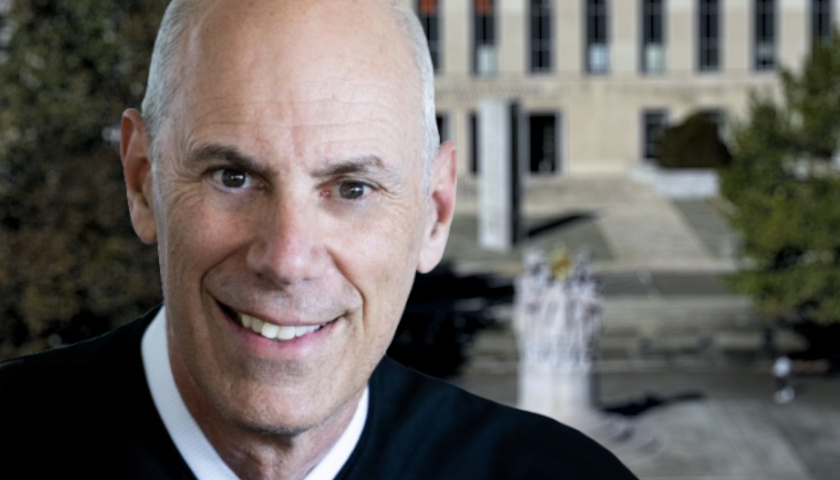
The Trump requirement is the administration’s effort to implement the Supreme Court’s 2023 Students for Fair Admissions (SFFA) opinion, which found racial preferences in university admissions unlawful, including for diversity or “DEI” rationales.

Read the full story