by Bradley Devlin
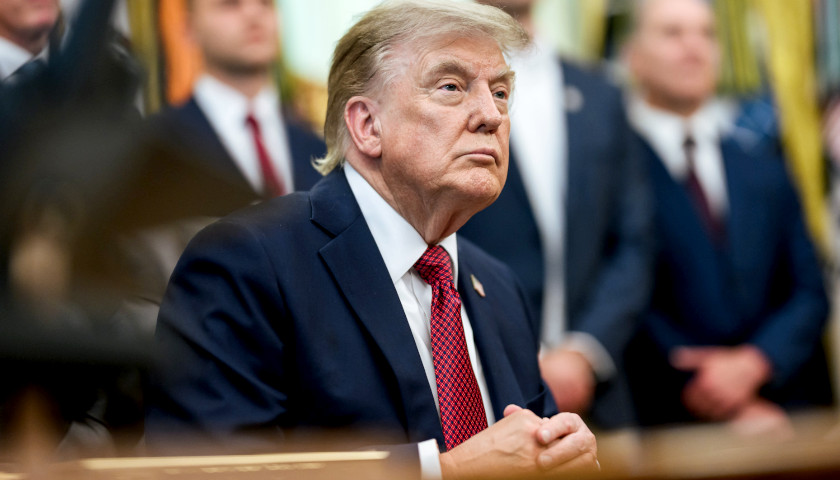
Charlie Kirk “made the winning difference” in President Donald Trump’s 2024 mandate, sweeping the swing states and winning the popular vote, according to none other than White House Chief of Staff Susie Wiles.
A year removed from Charlie’s death, Republicans from across the country are descending on Dallas to galvanize the party faithful ahead of the midterms.
It’s not looking good. In swing-state Senate races, Michigan, North Carolina, and Georgia—states Trump won by 1.4%, 3.2%, and 2.2%, respectively—Democrats have at least a 70% chance of winning. Senate Democrats are odds-on favorites to flip seats in Texas, Ohio, and Alaska, too—all states Trump won by more than 10 points.
In the days and weeks following Charlie’s death, “We are all Charlie Kirk” and “You just made a million Charlie Kirks” were common refrains posted by Kirk’s supporters on social media. The past year has made painfully clear to the right, however, that there was only one Charlie Kirk.
The pre-written obituary is a necessary tool in any writer’s kit. The standard practice in any newsroom is to prepare for the most-likely outcome but keep contingencies for the unexpected and unforeseen. More often than not, the writer’s obituary is metaphorical—a candidate is trailing in the polls, a sports team faces elimination, a movement is rocked by a major scandal—a declaration, and explanation, of defeat before the outcome has been determined.
Sometimes the obituary is literal. There are some real aces in this line of work, especially in political Washington. Spend an evening getting loose with these pallbearing penmen, and they’ll tell you the gist of what they’ve got so far on Koch, Carville, or Clinton (either). They’ll also tell you these works in progress are 5, 10, even 15 years in the making. It sounds crude, but it’s just business: Prepare for the most-likely outcome, and the only certainty in life is death. The question is not if but when.
Old men are the topic of those conversations, those whose legacies that have largely already taken shape as leathered skin prepares the return to dust. Not about the young, however accomplished they may be. Not about assassination, though that’s changing. Better to be prepared.
The ugly truth is, one year ago today, I started writing Charlie’s obituary, alongside a torrent of prayer, before we knew he was dead. We saw the video, and we had to prepare for the most-likely outcome.
I ended Charlie’s obituary with a call to take up Charlie’s cause: Preach the Gospel, improve the country. Few have.
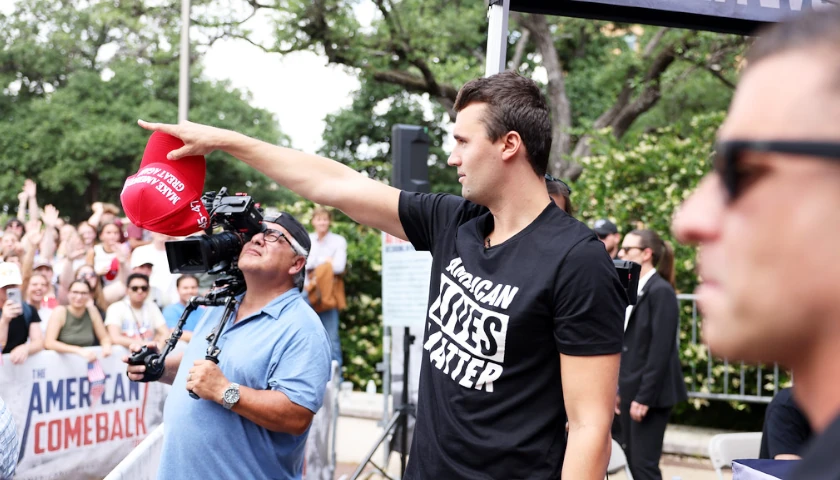
Charlie’s friends in life, Tyler Bowyer, Andrew Kolvet, and Blake Neff, continue to honor him in death. His widow, Erika, has been a paragon of feminine strength with a spirit quieted by the peace of God’s grace. Student activists have the courage to “Pick Up The Mic” and follow in Charlie’s footsteps. Because of their efforts, I still have hope that there are many mini-Charlies in training.
In May, Michael Knowles told me a hard truth: “The thing about assassinations is that they work.”
I was hoping that by Sept. 10, 2026, I could say he was wrong. But day after day, the right’s supposed leaders play brinkmanship with the coalition Charlie gifted us.
Charlie understood what a political coalition is: a defined group of people, working towards a defined outcome, on a defined timeline.
Charlie also understood that managing a coalition takes a shared vision, not a shared ideology. It is the thankless work of harmonizing factions, balancing their priorities, and utilizing their individual expertise. It takes prudence, fortitude, and charity—virtues currently in short supply.
The right will recite Edmund Burke’s famous words, “Rage and frenzy will pull down more in half an hour than prudence, deliberation, and foresight can build up in a hundred years,” but fail to heed his warning. We lecture our neighbor about the height of their hedges as we water our yard with kerosene.
Meanwhile, the Left has decided that supporting a woman accused of murdering her three children is not politically disqualifying—Pennsylvania Gov. Josh Shapiro is going for the Lindsay Clancy vote in 2028. They’ve turned Charlie’s assassination into a meme. The bullet ripping through his neck, a protest dance move. Hasan Piker sings “We Are Charlie Kirk” during a live show.
We are too busy fighting about whether or not an existing government program should punish married, stay-at-home moms to notice. We wax poetic about whether or not a $20 burrito exists, and why it’s not a problem if it does. We “debate” in 280 characters, stringing together terms like “establishment socialist integralist” or “neoconservative post-liberal traditionalist” so that terms, words, and labels are devoid of all meaning.
In these online spats, the name of Charlie Kirk has become a trump card. It is used as a cudgel to shut down debate even though Charlie died debating. His words are invoked out of context in the same way a socialist smugly cites a Bible verse to justify seizing the means of production.
Worst of all, Charlie’s graceful widow has been subjected to foul conspiracy theories and her social media has been inundated with nothing less than inhumane psychological torture.
When Charlie died, some conservatives said the Left had killed the last person on the Right willing to talk to the Left. In his absence, we’ve become unwilling or unable to talk to each other.
Charlie showed us that the art of politics is possible and modeled how to pursue it. But our enemies are eagerly prewriting their obituaries for the movement Charlie was instrumental in building. Tell them to hold the presses.
– – –
Bradley Devlin is the Senior Politics Editor and State News Manager for the Daily Signal.
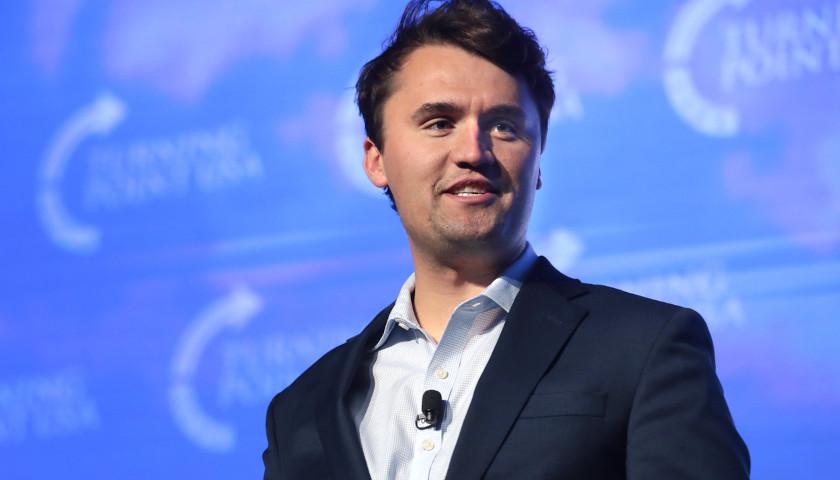
Photo “Charlie Kirk” by Gage Skidmore cc2.0.