by Tommy Vallejo
I spent 21 years in the Army before I spent years representing Montgomery County, a district shaped by Fort Campbell. In that overlap, I sat with more veterans than I can count who told me some version of the same thing. The hardest part of coming home wasn’t the transition itself. It was learning to live without the people who understood them.
I heard it again recently, in a series of roundtable conversations on veteran mental health in Tennessee. Veterans, advocates, and community leaders talked about what helps after service ends, and one thread kept surfacing. Veterans kept describing finding their community through video games, and the apps built around them, on active duty and long after.
That’s worth sitting with, because I don’t think any of these platforms were built with veterans in mind. Discord started as a way for gamers to talk while they competed. Signal began as a private messaging tool. Nobody designed these for people holding a unit together across deployments, time zones, and later, the strange quiet after service. Veterans found them anyway and turned them into something closer to infrastructure.
Downtime shapes a unit more than most people realize, and a console in a common room can do as much for cohesion as some formal programs. The Entertainment Software Association’s 2025 Veterans Survey backs this up. Most veteran gamers said playing helped them relax during service, strengthened camaraderie, and built teamwork among the people they served with.
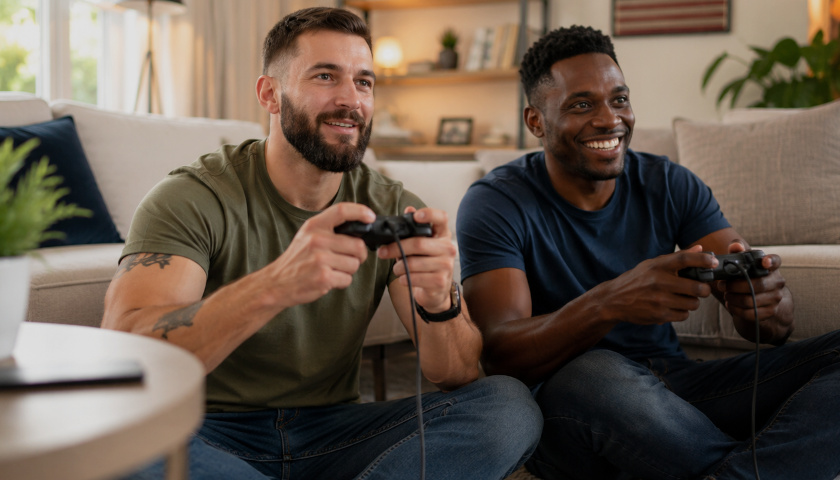
Then service ends, and the same tools carry veterans through what follows. Most veteran gamers still play with their people at least once a week and say it helps them stay connected. There’s something almost domestic in that. A weekly game night, organized over a Discord server or through a Reddit community, means somebody notices when you go quiet. A buddy asks how the job search went, or how the anniversary of a deployment sat with you this year. The veterans at our roundtables called these check-ins the difference between a rough day and a rough week or month. The survey found the same thing. Most respondents said gaming gave them a real outlet for stress and anxiety, and helped them cope through the hardest stretches.
Tennessee has a particular stake in this. We hold one of the largest veteran populations in the country, scattered from Memphis to Mountain City, many far from a VA facility or vet center. Distance doesn’t matter in a group chat or on a server that connects people across the globe. A veteran in a rural county can stay tied to his old unit as easily as one living outside the gates in Clarksville.
I never expected to watch a generation of veterans rebuild community through a headset and a screen. But I’ve seen it happen, roundtable after roundtable, story after story. Technology outgrew its original purpose and quietly became something this country has struggled for decades to give its veterans: connection. That’s worth noticing, and worth protecting.
– – –
Tommy Vallejos is a U.S. Army veteran and former Montgomery County commissioner who represented a district neighboring Fort Campbell.