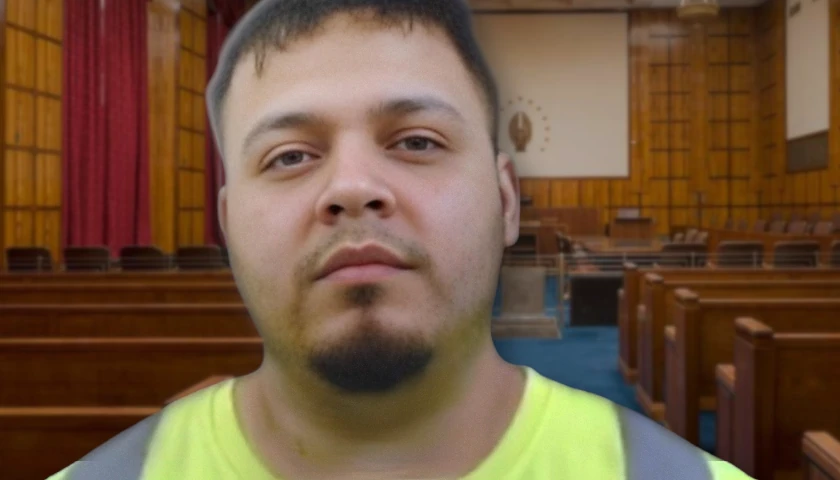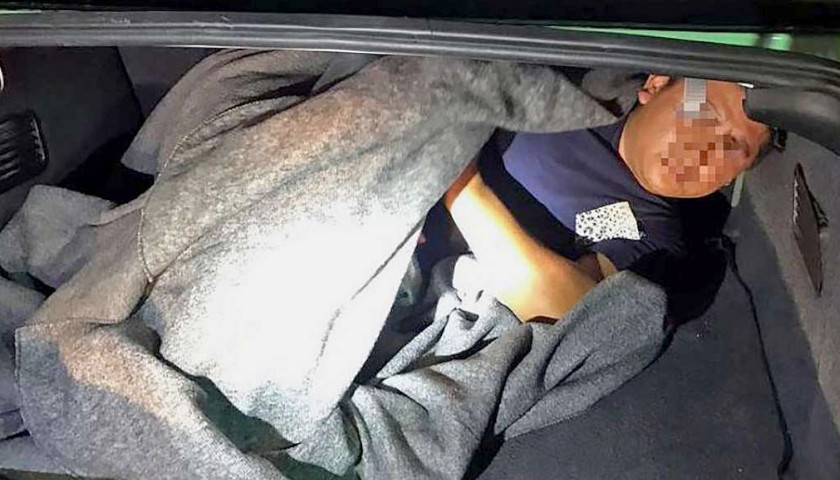
The defense attorneys representing Kilmar Abrego Garcia last Friday submitted a filing which revealed federal prosecutors in Tennessee have submitted about 150 hours of recorded jailhouse phone conversations as evidence to be used against the citizen of El Salvador in his federal human smuggling case.
His attorneys revealed the existence of the recordings in a status update submitted to U.S. District Court Judge Waverly Crenshaw, the appointee of former President Barack Obama who is overseeing the criminal case against Abrego Garcia.
Specifically, the jailhouse recordings were unveiled as the attorneys asked the judge to impose new requirements at the Abylon Detention Center in Farmville, Virginia, the privately operated U.S. Immigration and Customs Enforcement (ICE) facility where Abrego Garcia has been held since last month.
Informing the court that Abrego Garcia’s attorneys, based in Tennessee and New York, were burdened by the travel required to reach their client, the filing claimed that the federal detention facility additionally did not have a sufficiently private area to discuss his court case, and that electronic devices were prohibited from the facility.
“As such, Mr. Abrego has been unable to review the substantial electronic discovery produced by the government,” which the attorneys wrote included video retrieved from the body-worn camera and dashboard-mounted cameras employed by the Tennessee Highway Patrol (THP) when troopers stopped Abrego Garcia in November 2022, which was first reported by The Tennessee Star in April.
The attorneys then wrote that the lack of access to electronic devices means Abrego Garcia will additionally be unable to review “approximately 150 hours of recorded jail calls.”
While the attorneys did not specify whose voice was included in these recordings, Abrego Garcia was detained by the U.S. Marshals Service on behalf of the U.S. Department of Justice (DOJ) from June to August and was previously housed in federal facilities between the time of his March arrest and his later deportation.
Additionally, the owner of the vehicle Abrego Garcia drove in November 2022, Jose Ramon Hernandez Reyes, was convicted of human smuggling, and fulfilling his sentence inside a federal prison, before he agreed to cooperate with prosecutors on their case against Abrego Garcia.
Further hindering their client’s ability to review electronic evidence, Abrego Garica’s lawyers also claimed that issues with the equipment in Farmville have limited the viability of the facility’s remote visits, which are conducted via the teleconferencing program Zoom.
Claiming the communication issues could jeopardize the January 27, 2026, trial date set earlier this year, Crenshaw was requested by Abrego Garcia’s attorneys to issue an order compelling the detention center to clear a private room for Abrego Garcia and his lawyers, allow longer meetings, and permit the use of a laptop computer.
Though Abrego Garcia has pleaded not guilty to the charges, prosecutors recently made public a series of emails that confirmed the alleged human smuggler was considering a plea deal, which would have required a guilty verdict, for more than a month while in custody in Tennessee.
After The Star reported that THP stopped Abrego Garcia in November 2022, a spokesman for the state agency confirmed troopers were instructed to release him by the “Biden-era FBI.” A document released by the Trump administration later showed troopers suspected human trafficking.
– – –
Tom Pappert is the lead reporter for The Tennessee Star, and also reports for The Pennsylvania Daily Star and The Arizona Sun Times. Follow Tom on X/Twitter. Email tips to [email protected].