A team of researchers from the University of Memphis on Tuesday posed a challenge to activists’ claims about the level of pollution around the artificial intelligence (AI) facilities operated by xAI in Memphis, which recently received permission to install permanent natural gas turbines, when they said Musk’s company has “minimally” changed the amount of total pollution in the city.
The analysis by University of Memphis professors Chunrong Jia, Abu Mohammed Naser Titu, and postdoctoral researcher Namuun Batbaatar, was published on Tuesday by The Conversation. The experts wrote that their model showed the poor air quality in Memphis “got only slightly worse” after Musk’s company began using temporary turbines in September 2024.
“Our calculations found that the xAI turbines would contribute minimally to ambient air pollution in both neighborhoods. We also calculated that concentrations of sulfur dioxide, carbon monoxide and nitrogen dioxide would remain well below national standards,” wrote the researchers on Tuesday.
Noting that Memphis already suffered from heavy pollution of “fine particulate matter” in its air, which they said is considered to be higher than the national limit, the researchers said their model showed xAI would increase this form of pollution by just 1 percent.
Since completing their research, the University of Memphis experts said that data collected via satellite measurements and by an independent, accredited lab found similar results.
“Our analysis offers evidence that at least as of when we did our work, xAI’s natural gas turbines had not measurably degraded air quality in the surrounding neighborhoods,” they wrote.
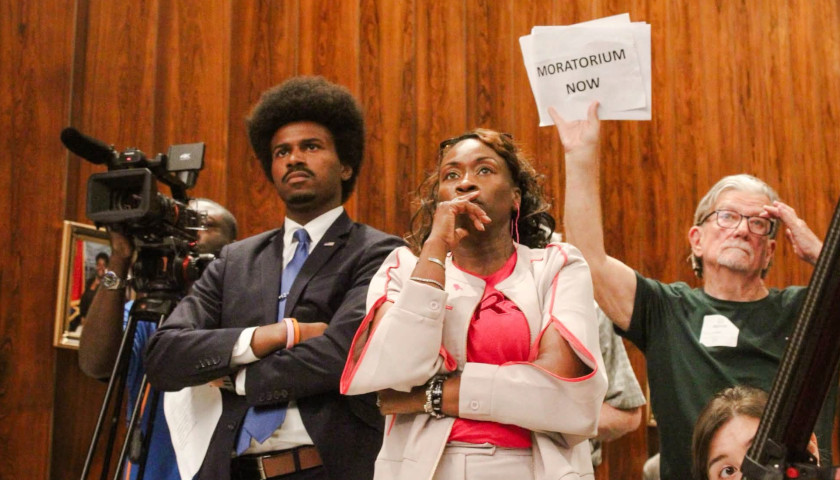
Their findings appear to contradict key claims by the Memphis Community Against Pollution (MCAP), whose leader, KeShaun Pearson, is the brother of State Representative Justin Pearson (D-Memphis), including the group’s claim that xAI is driving a 3 percent increase in the amount of nitrogen dioxide (NO2) in the city’s air.
According to the researchers, the NO2 levels in Memphis remained below national standards, and any change could be caused by the other polluters affecting the city’s air quality.
Similarly, while MCAP claims that xAI could be emitting up to 2,000 tons of nitrogen oxides (NOx) annually through its turbines, which would exceed the pollution generated by Memphis’ airport, the researchers implied that the actual levels are closer to those reported by the company.
Musk’s company received approval from the Shelby County Health Department to permanently install natural gas turbines in July, thereby reducing the company’s need for temporary installations that had drawn a legal threat from two activist groups.
Memphis-Shelby County Schools recently voted to accept an offer by xAI to upgrade four high schools with modern facilities.
– – –
Tom Pappert is the lead reporter for The Tennessee Star, and also reports for The Pennsylvania Daily Star and The Arizona Sun Times. Follow Tom on X/Twitter. Email tips to [email protected].