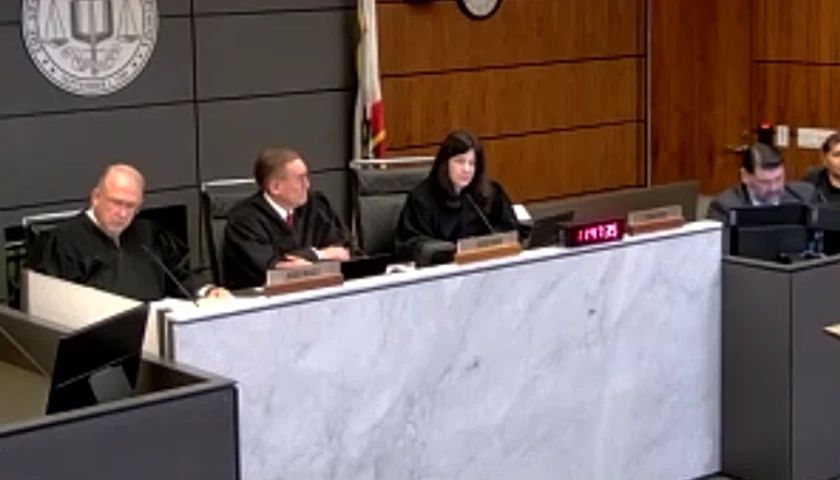
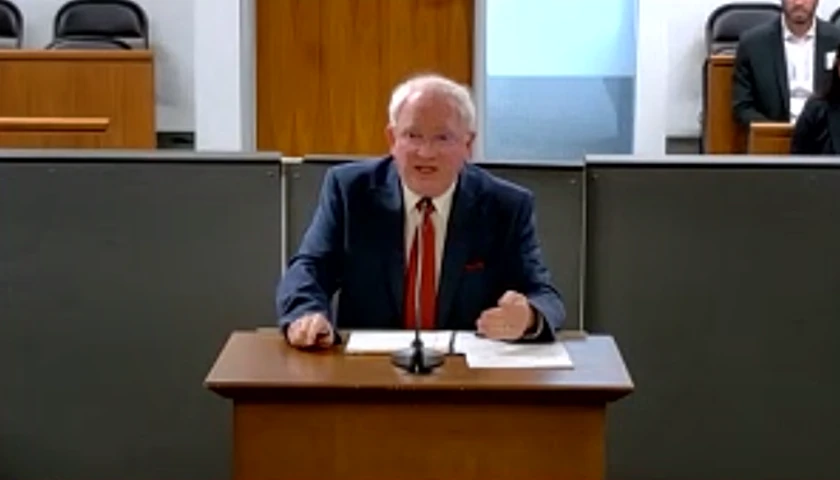
A panel of three judges with the Review Department at the State Bar of California, which is the appellate level for the bar, heard oral arguments on Wednesday in John Eastman’s appeal of a bar disciplinary judge disbarring the former Trump attorney. During the two hour hearing, the argument by the bar’s attorney Michelle Lee focused on claiming that Eastman lied when he said there was election fraud, since she said there was never any evidence of election fraud produced from the 2020 election. Eastman represented Trump intervening in the Texas v. Pennsylvania lawsuit over the election, and wrote a memo for Trump advising him of various options to deal with the election wrongdoing — including scenarios where Joe Biden would ultimately win.
Alex Haberbush, a constitutional attorney based in Long Beach, California, who served as legal counsel to Eastman, told The Tennessee Star, “The notion that Dr. Eastman knew his claims about fraud and illegality in the 2020 election were false is patently absurd and totally unsupported by the record from the Hearing Department. Especially in light of the fact that the claims were true. As subsequent reports and investigations have come out, Dr. Eastman’s claims have only been more and more vindicated.”
Lee began her argument by stating, “Respondent made repeated and intentional false statements to the courts the media and Vice President Pence that the 2020, presidential election had been stolen from Trump as a candidate who was his client through outcomes of determinative fraud, and that there were legally valid Trump electors available to stop this deal.” She referred to fraud again further on, “Respondent knew that his statistical evidence was not evidence of fraud.”
However, Eastman focused his legal representation of Trump on addressing other laws that were broken, not on fraud, which is difficult to prove due to the necessity of showing multiple elements. Fraud must be proven in court, so Eastman could not have proven fraud before all of the cases were brought.
Polls show that around half the country believes there was wrongdoing in the 2020 election that affected the results, and it has never been proven conclusively that this was not the case. Rasmussen Reports found that 55 percent of likely U.S. voters believe cheating likely affected the outcome of the 2020 presidential election. Another poll that recently came out from the group found that one in five voters admitted they cheated in the 2020 election.
Lee claimed, “These lies were part of a coordinated plan with Trump to deceive Vice President Pence into believing that he had both a factual basis and the legal authority to unilaterally stop the electoral count.” However, since the law in this area is not clear — Lee said in court that no law review articles addressed this issue, other than a footnote in one article — Eastman’s attorney Randy Miller said his position evolved a little on this issue, and leaned towards the option of merely delaying the certification while the states looked into the wrongdoing.
Lee went on, “He knew that there were no dual slate of electors because no state legislature had acted to certify a second slate…”
However, she failed to acknowledge that Pennsylvania legislators, who were not in session, considered presenting an alternate slate of electors. Legislators in other battleground states were considering them too.
Lee alleged, “The whole point was to create the illusion of fraud, of active litigation and of multiple slaves of electors in order to convince pence to discard or delay the counting of electoral votes.” However, the memo Eastman wrote for Trump didn’t say that, it specifically laid out several options Trump could take, including accepting the slates of electors from the battleground states suspected of wrongdoing.
She said, “He did not even know what was going on in Arizona, Nevada or New Mexico.” Lee provided no evidence to back up that statement. As a leading constitutional attorney on the right, and Trump’s attorney, Eastman would have had access to the best information coming out of those states.
Lee went on, “But that did not keep him from recommending to the vice president to not count their electoral votes.” This isn’t accurate, since Eastman concluded that delaying the counting was more of a viable option, not rejecting the slates.
She said Eastman’s actions, including his speech at the J6 protest, “naturally and foreseeably contributed to the harm that occurred on January 6.” The judges on the panel pushed back on that, sounding incredulous that she was placing blame for the raucous protest on Eastman.
Lee went on, “So putting aside, for the moment, the fact that the legal theory has that the vice president can unilaterally reject single slates of certified electors. That would only be based on the idea that the election was actually stolen, and he had no evidence that he was actually stolen.”
However, during Eastman’s trial, Berkeley constitutional law professor John Yoo, considered one of the leading experts on constitutional law in the country, went over examples in history where vice presidents appeared to exercise discretion when considering whether to accept slates of electors, and there was never any evidence that the elections were “stolen,” but merely speculation about the possibility of wrongdoing.
After her opening, Lee said the harm Eastman caused was similar to the harm caused when a woman took the bar exam for her husband.
She claimed, “There’s been no evidence anywhere of any single fraudulent vote — that just didn’t happen. He couldn’t produce any evidence in the year 2023 when the trial went forward, in the year 2025, and there’s no evidence of a single fraudulent ballot anywhere. And to tell those kinds of lies…”
Eastman spoke at the end of the hearing, and listed off evidence of fraudulent ballots that courts have acknowledged, such as votes from dead people and large amounts of ballots filled out in the same handwriting. “Opposing counsel said that I was … false when I stated that dead people voted — that’s on the ellipse in the complaint that was filed against me the NDC — they said that was false and knowingly false, because by then, I knew that only 1,500 dead people have voted, in other words, in the very claim of the charge they admit that my statement was true.”
Miller said during his argument that one of the slates of electors from Hawaii in the 1960 election was not certified, yet it was still submitted to Congress and the vice president and opened. However, Lee, when giving her rebuttal afterwards, ignored the fact the slate was treated as legitimate, stating, “Eastman knew that uncertified slates of electors were dead on arrival.”
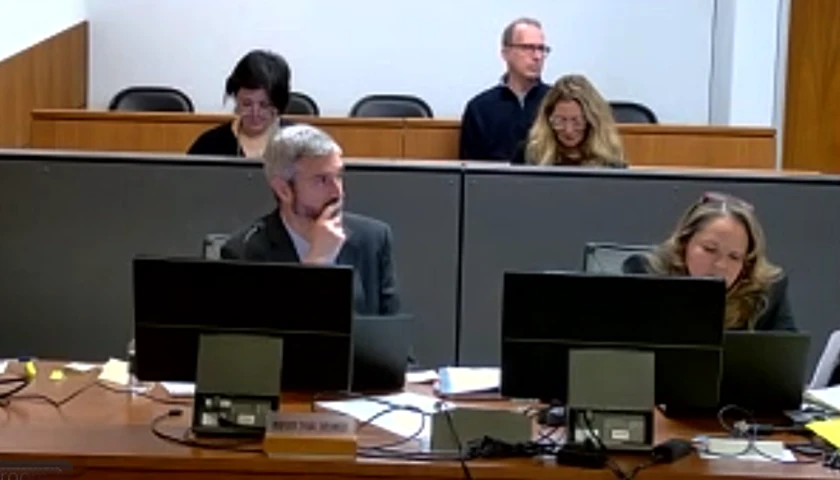
The judges asked about Pence’s attorney Greg Jacobs stating that it was “bullsh**” that Pence had substantive authority over accepting the electoral slates. Miller pointed out that Jacobs’ view on the issue changed over time similar to Eastman’s; as they researched the law, they both started to lean more towards advising Pence to delay certification instead of flat out rejecting the slates.
During his speech, Eastman — whose resume is over 100 pages long — said, “I will tell you, as an expert in this area, the Constitutional Convention made one thing absolutely clear, and that is, it would not want Congress having any role in the choosing of the president because that was a preparation of powers. That’s the only thing that’s clear. Everything else is speculation and extrapolation and the scholarship.”
He rebutted Lee’s claim about legal scholarship only addressing the controversy in a footnote. “The scholarship, it’s not just a footnote in one article, most of the scholars — so Mr. Kesselman saying he admits that being the first years of our nation’s history, everybody thought the president of the Senate had the authority in elections … The president of the senate made determinations about the validity of votes, whether to count them or not. They’re playing a game when they say no vice president ever rejected — but they had made the determination on whether to resolve a dispute. That means they exercised that discretionary authority.”
Eastman filed his appeal brief in October. He is also facing prosecution in the Georgia RICO case formerly led by District Attorney Fani Willis and the alternate electors prosecution by Arizona Attorney General Kris Mayes. The judge in the latter case has indicated he may dismiss the prosecutions due to violating the First Amendment. Eastman’s GiveSendGo legal defense fund has raised $923,490. The full list of articles about the disbarment trial is located here.
– – –
Rachel Alexander is a reporter at The Arizona Sun Times and The Star News Network. Follow Rachel on Twitter / X. Email tips to [email protected].