

Health and Human Services Secretary (HHS) Robert F. Kennedy, Jr. on Wednesday unveiled new Dietary Guidelines for Americans, 2025-2030, in what officials described as the most significant reset of federal nutrition policy in decades, shifting focus from processed foods to high-quality proteins, healthy fats, fruits, vegetables and whole grains.
“My message is clear: EAT REAL FOOD,” Kennedy said in a video briefing announcing the changes.
The new recommendations, released by the White House and HHS, aim to address America’s escalating chronic disease crisis.
“These Guidelines return us to the basics,” Kennedy said. “American households must prioritize whole, nutrient-dense foods—protein, dairy, vegetables, fruits, healthy fats, and whole grains—and dramatically reduce highly processed foods.”
In a detailed fact sheet outlining the new policy, HHS noted, “For decades, the U.S. government has recommended and incentivized low-quality, highly processed foods and drug interventions instead of prevention. Under the leadership of President Trump, the government is now going to tell Americans the truth.”
The announcement was made via a series of posts on X from the White House account, including a visual representation of “The New Pyramid” (pictured here), an inverted food guide that places proteins, dairy and healthy fats alongside vegetables and fruits at the broader top, with whole grains forming a smaller base at the bottom. This contrasts sharply with previous models, such as the 1992 Food Pyramid, which emphasized carbohydrates at the foundation.
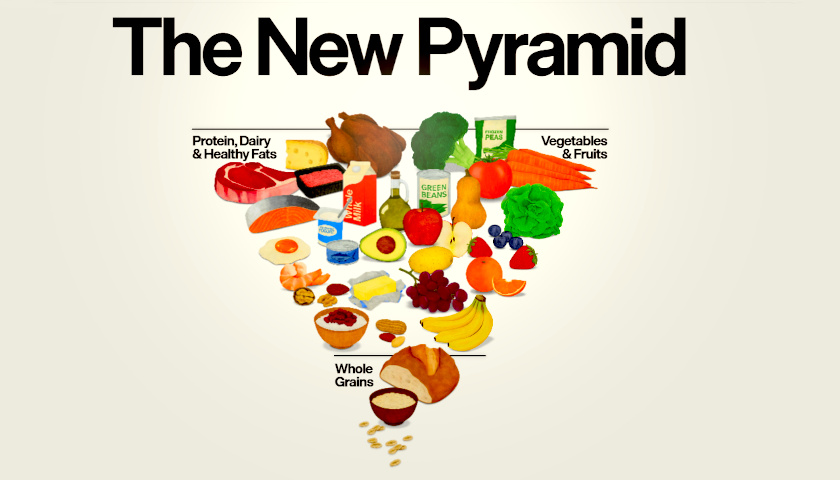
Prioritizing Protein: High-quality sources from animals (eggs, poultry, seafood, red meat) and plants (beans, peas, lentils, nuts, seeds, soy), aiming for 1.2–1.6 grams per kilogram of body weight daily. This reverses prior guidance that “demonized” protein in favor of carbs.
Avoiding Highly Processed Foods: For the first time, the guidelines explicitly warn against “highly processed packaged, prepared, ready-to-eat, or other foods that are salty or sweet,” including sugar-sweetened beverages like soda and energy drinks.
No Added Sugars: “No amount of added sugars or non-nutritive sweeteners is recommended,” with a call to completely avoid them for children under age 4.
Healthy Fats: Bulk from whole foods like meats, eggs, full-fat dairy, olives and avocados; use nutrient-dense options like olive oil for cooking.
Whole Grains and Reduced Refined Carbs: Prioritize fiber-rich whole grains (2–4 servings daily) while significantly cutting refined items like white bread, tortillas and crackers.
Lower-Carb Options for Chronic Conditions: Recommends reduced carbohydrate intake for those with diseases like diabetes to improve outcomes.
Vegetables and Fruits: 3 servings of vegetables and 2 of fruits daily, in fresh, frozen, dried or canned forms.
Hydration: Water or unsweetened beverages preferred.
Implementation of the new policy will take place over the next two years, as the USDA and HHS translate the guidelines into updated procurement rules, meal standards, and eligibility criteria for federal programs. In all, the new guidelines form the basis for federal programs serving over 100 million Americans, including school lunches, military meals and SNAP (Supplemental Nutrition Assistance Program).
The policy shift is projected to lower healthcare costs by reducing preventable chronic diseases often linked to diet, which account for 90% of U.S. healthcare spending according to the fact sheet.
The United States faces the highest obesity and Type 2 diabetes rates in the developed world per OECD data, contributing to elevated health expenditures that consume a substantial share of federal resources.
Childhood obesity rates remain alarmingly high compared to many peer nations, exacerbating long-term public health and economic burdens. Military readiness is impacted, with 77% of youth ineligible due to diet-related conditions.
The administration rejected the prior focus on “health equity” as a “central prism,” instead prioritizing health outcomes for all. “When DEI impacts nutrition science, it enables special interests to argue the status quo is acceptable,” the release noted.
The full guidelines are available at realfood.gov, where the site describes the New Pyramid as a “simple guide to eat real, whole foods consistently,” supporting personalization based on needs, preferences and budgets.
“This is how we Make America Healthy Again,” Kennedy said.
– – –
Christina Botteri is the Executive Editor at The Tennessee Star and The Star news Network. Follow her on X at @christinakb.




I am all for eating better BUT as the cook in this household I find it very time consuming to prepare all of these fresh foods being promoted. I guess that these higher-ups do not have this problem as their cooks/”private chefs” have all the time they need.