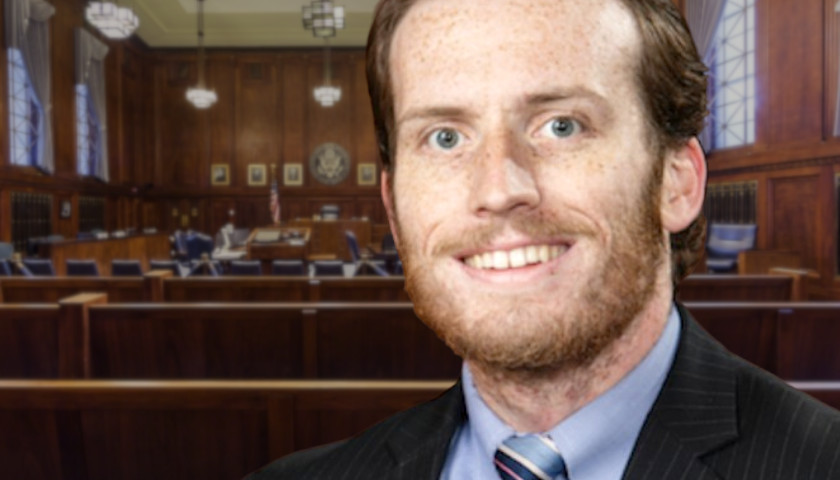

Williamson County mayoral candidate Todd Kaestner sat down with The Tennessee Star’s CEO and Editor-in-Chief Michael Patrick Leahy on Monday to outline his plans for addressing traffic congestion, improving government transparency, and implementing fiscal reforms to manage the county’s rapid growth and rising budget pressures.
Kaestner, a Republican candidate running to succeed retiring incumbent Williamson County Mayor Rogers Anderson, has experience serving as a Williamson County Commissioner for five years and most recently retired as the executive vice president of Brookdale Senior Living Inc., where he worked for 41 years in finance, development, acquisitions, dispositions, and capital formation.
On Monday’s edition of The Michael Patrick Leahy Show, Kaestner highlighted the dramatic population growth in Williamson County, which he explained has put immense pressure on roads and local infrastructure.
“In the 35 years from 1990, the state population went up 47 percent. Williamson County went up 238 percent. So we’re 3.3 times the size we were in 1990 countywide,” Kaestner said.
He argued that traffic relief will require state involvement and investment, since key roads like I-65 and Columbia Pike are state-controlled. He stressed that the county deserves recognition as a major economic engine of Middle Tennessee.
“These are state highways, state roads. The state needs to fund that, and they need to get after it and do it. It is a fair argument and an easily made argument that Spring Hill and Williamson County are a huge part of the economic engine of Middle Tennessee, and we need to be respected as such. We need the investment. That is the respect that we deserve and I think the state’s going to come around and recognize that,” he added.
On the fiscal side, Kaestner emphasized the need for greater transparency and efficiency in county government.
He pointed to underused school capacity – noting how about 24 percent of seats are vacant – as a sign that spending and staffing may not match current needs and called for more detailed, accessible budget information so officials and the public can identify inefficiencies.
“We have 55,000 seats in our schools and we have about 42,200 students in our 55,000 seats, which means we’re about 24 percent vacant…because the value of our homes has risen so high so quickly that young families can’t afford to come here,” Kaestner explained.
“It begs the question, what do we do to make sure we’re as efficient as we possibly can be? To assess that, you have to have decent information on a detailed level,” he added.
Kaestner explained how broad budget categories make it difficult to assess efficiency or identify waste, again using education as an example.
He explained, “If you look at the budgets. You’ll see large subtotals presented…You really need to know how many teachers do I have? How many counselors do I have? How many students are they carrying…to make sure that we’re not wasting money.”
Finally, Kaestner tied fiscal reform to the county’s debt, which currently exceeds $100 million annually in payments.
He suggested by operating more efficiently, the county could reduce expenses, pay down debt, and redirect funds toward critical infrastructure and transportation improvements.
“We have to figure out how to operate more efficiently, how to reduce our expenses,” Kaestner stressed.
The general election for Williamson County mayor will be held on August 6, 2026. The Republican primary is scheduled for May 5.
Live December 29 Tune in now to The Michael Patrick Leahy Show – your AMERICA FIRST news talk!
– Watch LIVE here on X
– Watch LIVE on Roku
– Listen on Spotify
– Listen on WENO AM760 in Nashville
– Read more at @TheTNStarhttps://t.co/bpcwhOrQQh— Michael Patrick Leahy (@michaelpleahy) December 29, 2025
– – –
Kaitlin Housler is a reporter at The Tennessee Star and The Star News Network. Follow Kaitlin on X / Twitter.