
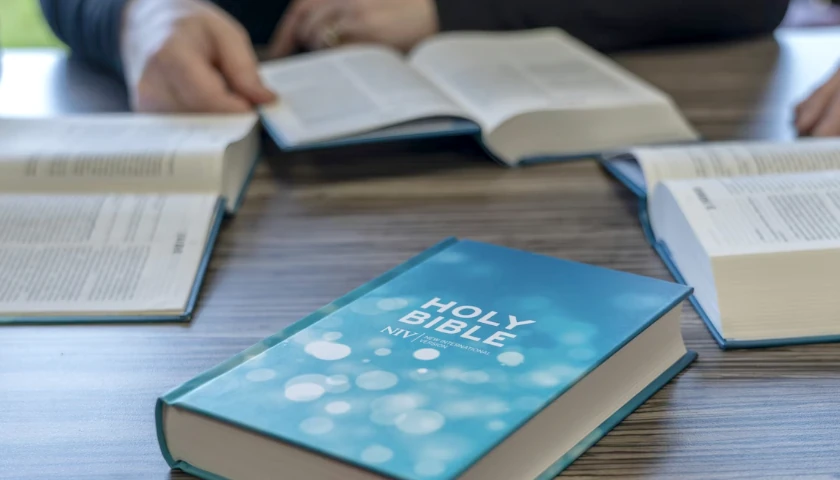
The Texas State Board of Education on Thursday gave preliminary 9-1 approval to a pared-down mandatory literary works list for all public school students in grades K-12, including multiple Bible passages and stories presented as required reading. The list, required by a 2023 state law, will undergo further revisions before a final vote in June. If adopted, the requirements would take effect in the 2030-31 school year.
The New York Times reported on Tuesday that the Texas State Board of Education proposal, which Republicans dominate with a 10-5 majority, brings a US- and Texas-centric lens to history, with less emphasis on world history, a shift some historians and progressive groups oppose.
The proposal stems from House Bill 1605, passed by the 88th Texas Legislature in 2023, which directed the Texas Education Agency to create a list specifying at least one literary work per grade level (plus supporting vocabulary) to be taught statewide in English language arts and reading classes. The goal is to ensure consistent, high-quality instruction across Texas’ roughly 5.4 million public school students. Schools must teach the works in full unless excerpts are specified; parents may opt their children out of specific readings under Texas Education Code §26.010 if they conflict with family beliefs. The board previously delayed action from January to allow more feedback.
A draft of the list compiled by the TEA originally contained roughly 300 titles but was shortened after criticism that it was too lengthy and “lacked diversity.” It still retains several biblical selections alongside such classics as The Very Hungry Caterpillar and A Wrinkle in Time.
Drawing particular ire are Bible-related lessons. From the current draft rule, these include:
Kindergarten: The Golden Rule
“Do unto others as you would have them do unto you,” spoken by Jesus Christ and recorded in the New Testament (Matthew 7:12; also Luke 6:31).
Grade 1: The Parable of the Prodigal Son
The New Testament story (Luke 15:11-32) in which Jesus tells of a wayward son who returns home and is forgiven by his father.
Grade 3: The Road to Damascus
The account in the New Testament (Acts 9:1-19) of Saul’s dramatic conversion to Christianity after encountering the risen Jesus; he becomes the Apostle Paul.
Grade 6: Do Not Be Anxious
(New Testament, ESV translation)
Jesus’s words in Matthew 6:25-34, urging trust in God rather than worry.
Grade 7: Jonah and the Whale
(Hebrew Bible/Old Testament, NIRV translation)
The full Book of Jonah, in which the prophet is swallowed by a great fish after fleeing God’s command.
Grade 7: The Definition of Love
(New Testament, ESV translation)
The Apostle Paul’s famous passage in 1 Corinthians 13:1-13, beginning “Love is patient, love is kind…”
Grade 7: The Shepherd’s Psalm
(Hebrew Bible/Old Testament, KJV translation)
Psalm 23 (“The Lord is my shepherd…”).
English I: David and Goliath
(Hebrew Bible/Old Testament, NIRV translation)
The story from 1 Samuel, Chapter 17, of the young shepherd defeating the Philistine giant with a sling.
English II: The Tower of Babel
(Hebrew Bible/Old Testament, NIRV translation)
Genesis 11:1-9 describes humanity’s attempt to build a tower to the heavens and God’s subsequent confusion of languages.
Public testimony at a previous committee meeting on Tuesday drew hours of comment from teachers, parents, students, and advocacy groups.
Supporters emphasized the cultural and historical value of the selections.
Board Member Keven Ellis, who offered the amendment for the shortened list, said, “There are other states, many other states, who have recommended reading lists,” adding, “To my knowledge, there is not one that will have a required reading list as robust as this, that will be common for every student across the state.”
Opposition was vocal and at times fiery. Markesha Tisby, an education consultant who also serves as the president of the Texas Council of Teachers of English Language Arts, reportedly testified that the process sidelined educator input and urged the board to slow down.
“I believe that an acceptable list would be one that’s created with teacher expertise,” she said. “There’s still time. There’s no prize for making this decision quickly. We have time to build something great for our Texas students, and they deserve it.”
One recent graduate testified that the lessons were “unhelpful and counterproductive to the real needs of students and educators.”
Critics also highlighted the list’s heavy emphasis on Christian texts with little representation from other faith traditions, underrepresentation of women and authors of color, and the risk of crossing into religious instruction. One opponent reportedly described the inclusion of biblical material as “a lawsuit waiting to happen,” arguing it could violate the separation of church and state in public schools.
A formal public comment period is set to run from May 15 to June 15. The board will then hear additional oral and written testimony at its June meeting before taking a final vote on adoption. Districts would then have time to acquire materials and train teachers ahead of the 2030 implementation.
– – –
Christina Botteri is the Executive Editor of The Texas Lone Star and The Star News Network. Follow her on X at @christinakb.