Legal commentator and retired attorney Mark Pulliam said the U.S. Supreme Court “has to” take former Trump attorney John Eastman’s appeal of his California disbarment, warning that failing to intervene would give a “green light to this tyrannical oppression” and further erode First Amendment protections for lawyers who provide controversial legal advice.
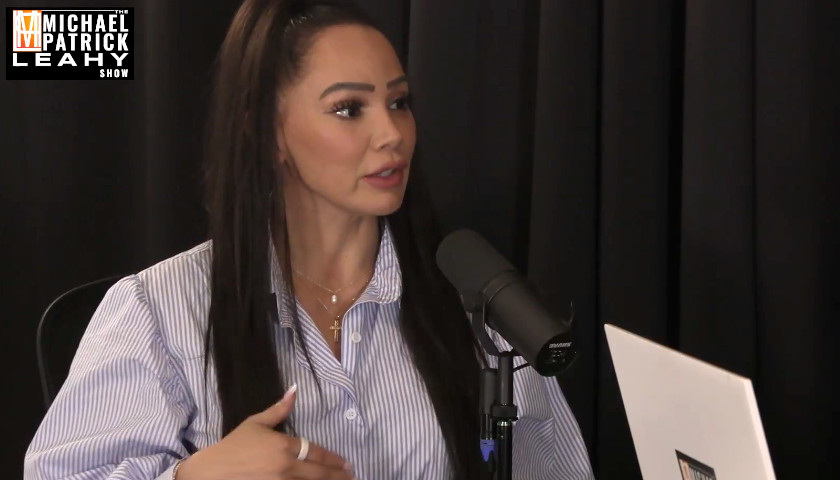
Pulliam, during Monday’s edition of The Michael Patrick Leahy Show, criticized California’s attorney discipline system, calling it a “kangaroo court” and comparing the proceedings against Eastman to “Star Chamber” tactics and “the Spanish Inquisition.”
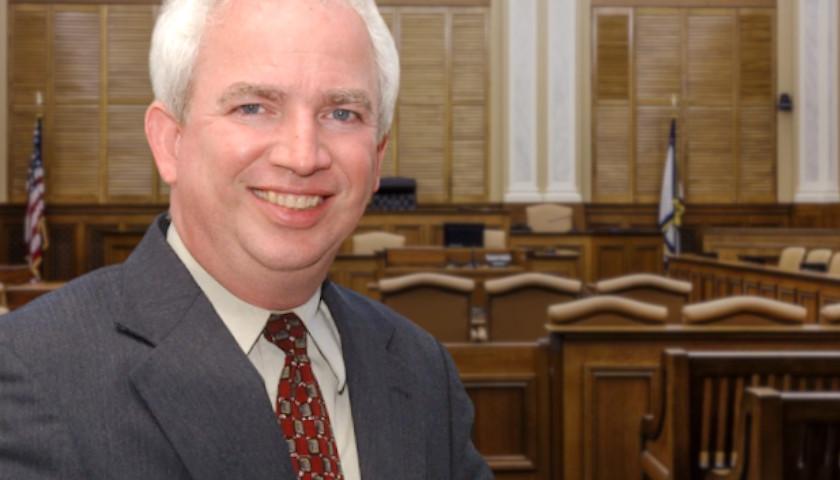
Eastman, a constitutional scholar and former dean of Chapman University’s Fowler School of Law, was formally disbarred by the California Supreme Court last month following recommendations from the State Bar Court related to his legal advice to President Donald Trump after the 2020 election.
Pulliam began by emphasizing Eastman’s legal credentials and stature within conservative legal circles.
“John Eastman is a very distinguished legal scholar, went to the University of Chicago Law School, got a PhD from the Claremont Graduate School,” Pulliam said. “He founded the Claremont Institute’s Center for Constitutional Jurisprudence and taught for many years at Chapman University Law… He was dean there… he’s participated in hundreds of Supreme Court cases, filing amicus briefs, et cetera. Very smart guy.”
Pulliam detailed how Eastman’s legal jeopardy stemmed from his role advising Trump on disputed election procedures and the constitutional authority of then-Vice President Mike Pence during the certification of electoral votes.
“John Eastman gave advice to the president and they were trying to influence Mike Pence as vice president to put a hold on the counting of the electoral votes until some of these issues had been resolved,” Pulliam said.
Pulliam argued that the constitutional and historical questions surrounding disputed electors were unsettled and not outside the bounds of legitimate legal debate.
“There were dueling slates of electors from Hawaii,” he noted, referring to the 1960 presidential election. “So this is not something that was unprecedented in our history. It’s kinda murky.”
He further stated that Eastman himself acknowledged the aggressive nature of the legal theories being advanced.
“John Eastman gave some aggressive advice, and he said so,” Pulliam said.
Pulliam repeatedly framed the disciplinary action against Eastman as an assault by the political left on attorneys’ First Amendment rights.
“The left takes the position that any challenge to the 2020 election is per se off limits and grounds for discipline,” Pulliam said. “Even though John Eastman did not make this argument to any court, did not put it in a brief or whatever, just giving legal advice to his client as he was asked to do, for that, he has been disbarred by the State of California.”
Pulliam argued the case’s implications extend far beyond Eastman personally.
“So the question is: Do lawyers have First Amendment rights to give legal advice to their clients, and what is the scope of that First Amendment right?” he asked.
He compared Eastman’s situation to other forms of constitutionally protected speech that courts have historically defended.
“Lawyers can have a First Amendment right to advertise,” Pulliam said. “Then you look at what else does the First Amendment protect? Topless dancing, pornography, violent video games, crush videos. The New York Times has a First Amendment right to publish classified government documents. Even telling lies, spreading hate, all protected by the First Amendment.”
“But yet when John Eastman gave some controversial advice on a highly disputed subject to his client, who’s not complaining about the advice, the State of California comes in and says, ‘We’re gonna take away your law license for doing that,’” he continued. “That is nothing but censorship. It’s punishment for saying something that’s disfavored.”
Pulliam characterized Eastman’s communications with Trump as “core political speech.”
“This had to do with advice to the President of the United States over the election irregularities,” he said. “What could be more important as a topic?”
Pulliam also cited examples from American legal history to argue that controversial legal advocacy has long been protected and often later vindicated.
“So you think about all of the social changes that have occurred since the 1960s because of litigators pushing the edge,” he said. “If Thurgood Marshall, who argued Brown versus Board of Education, if some state had disbarred him because, ‘Oh, don’t you know Plessy v. Ferguson is the established law?’”
He added, “What if John Adams, who defended British soldiers as a result of the Boston Massacre… if the same attitude that they’ve taken towards John Eastman was applied to him, he would’ve been disbarred.”
Pulliam cited recent Supreme Court precedent on licensed therapists and compelled speech as evidence that the Court may be receptive to Eastman’s appeal.
“Just earlier this term, licensed therapists in Colorado were given a First Amendment right to speak candidly to their patients over conversion therapy issues,” Pulliam said. “So why is a therapist allowed to have a First Amendment right with patients, but a lawyer does not, giving advice to the President of the United States? It’s an outrage.”
When asked whether the U.S. Supreme Court would ultimately hear Eastman’s appeal, Pulliam said he believes the justices “have to” take the case.
“I think they have to, because otherwise they’re giving a green light to this tyrannical oppression,” he said. “This really is awful what these various bar associations are doing.”
He warned that failing to intervene would create a chilling effect across the legal profession.
“Nobody really has been weighing in on this, because nobody wants to end up like John Eastman,” Pulliam said. “When you become the target of one of these state bar disciplinary proceedings, you’re a tar baby.”
Pulliam concluded by arguing that the broader legal establishment risks undermining public confidence in the justice system.
“It’s very unbecoming to the leftist legal establishment,” he said. “They’re like, ‘This is the Spanish Inquisition. This is Star Chamber.’ … How can that be permitted? It cannot be.”
Tune in now to The Michael Patrick Leahy Show – your AMERICA FIRST news talk!
– Watch LIVE here on X
– Watch LIVE on YouTube / Rumble / Roku / AppleTV
– Listen on Spotify
– Listen on WENO AM760 in Nashville
– Read more at @TheTNStarhttps://t.co/7X8B2qXYyg— Michael Patrick Leahy (@michaelpleahy) May 18, 2026
– – –
Kaitlin Housler is a reporter at The Tennessee Star and The Star News Network. Follow Kaitlin on X.