
President Donald Trump returned to the U.S. on Friday following a 36-hour summit in China with Chinese President Xi Jinping, concluding talks that produced agreements on trade, aviation, and Iran while setting the stage for a reciprocal visit by Xi to the U.S. in September.
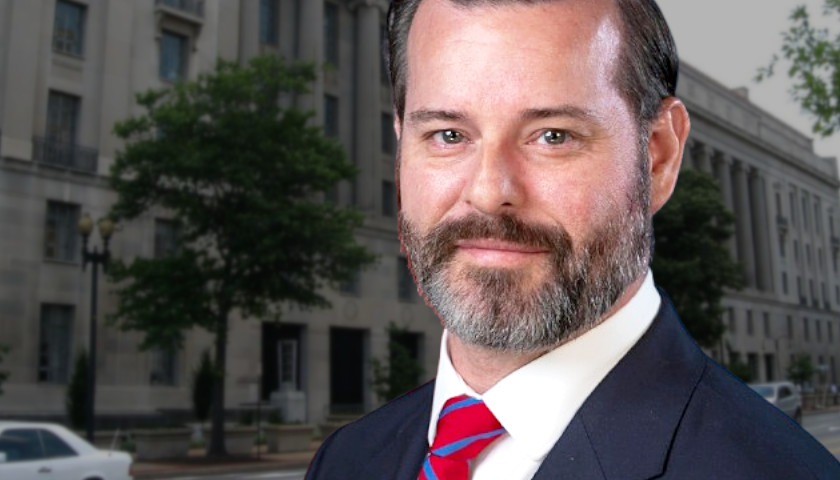
Speaking on The Michael Patrick Leahy Show, veteran political reporter Neil W. McCabe described the summit as more symbolic than transformational but ultimately successful because “the success of the summit was having the summit.”
McCabe said his expectations entering the meeting were “relatively low,” explaining, “I didn’t really see any big wins or losses. I think a lot of the agreements didn’t really need the president’s attention.”
The summit featured extensive pageantry and ceremonial displays designed to emphasize the relationship between the two world leaders. Host Michael Patrick Leahy, the CEO and editor-in-chief of The Tennessee Star, argued the event elevated Xi Jinping’s international standing alongside Trump and also reinforced diplomatic ties between the two nations.
“It used to be that Chinese leaders or any leader was eager to have a summit with us and our president,” McCabe said. “And now it seems like the other way around.”
According to McCabe, the summit yielded several economic agreements, including expanded agricultural exports and aircraft purchases.
“You got deals on soybeans, and you have deals on wheat, and they’re gonna allow Americans to sell beef in China, which is gonna be very helpful for the ranchers,” he said.
McCabe also reported that China agreed to purchase Boeing aircraft manufactured in Washington state.
“Those Boeings will be built in the United States, in Washington state, but then flown to China, where all of the interiors and the seats and everything else will be done,” McCabe explained. “Those are gonna be Chinese jobs too, but there’s some Boeing jobs there.”
McCabe said Trump also raised the issue of imprisoned Hong Kong publisher Jimmy Lai during the summit discussions.
“When they asked him about Jimmy Lai, Trump said ‘I brought it up,’ and Xi said it was tough and he couldn’t really pull it off,” McCabe reported.
McCabe noted that Chinese officials remained firm in rejecting calls for Lai’s release.
“The Chinese foreign minister said, ‘Hey, we’ve told the United States numerous times that there is no way we’re releasing that guy because he was the mastermind behind the Hong Kong uprising,’” McCabe said.
McCabe also reported on the two leaders’ talks on Iran and rising tensions in the Strait of Hormuz, noting that Trump left China with “a framework on the Iranian situation” in which Chinese officials “affirmed they’re against the Iranians having the nukes.”
He added that China also pledged support for keeping the Strait of Hormuz open and agreed “to not supply the Iranian regime.”
McCabe questioned reports that Iranian oil shipments had successfully moved through the region despite U.S. enforcement operations.
“These things are wicked slow, and they’re wicked big,” McCabe said of oil tankers. “So the idea that these things are sneaking through a strait that’s 21 miles across…”
Drawing on his Coast Guard experience, he added, “Nobody sneaks through.”
McCabe said observers should closely watch the movement of the USS Boxer amphibious readiness group for indications of possible military escalation involving Iran.
“The thing you have to look for is USS Boxer,” he said. “It’s a three-ship amphibious readiness group. It’s the Boxer, which is the lead aircraft carrier, it’s the Comstock, and Portland.”
He explained the force includes “2,000 Marines” and is “designed to take the beach.”
According to McCabe, if the Boxer moves into U.S. Central Command operations, it would signal deeper involvement in the region.
“As soon as they chop into Fifth Fleet, which is Central Command, then they’re part of the Iran theater,” he said.
McCabe suggested future operations could focus on Iranian drone and naval launch sites near the Strait of Hormuz.
“If Iran thought that the Strait of Hormuz would become their toll booth,” he said, “this thing might end with the Strait of Hormuz becoming the American toll booth.”
McCabe also addressed questions surrounding the War Powers Act and ongoing U.S. military operations.
“No president has accepted the constitutional legitimacy of the War Powers Act,” he said.
He explained that the Trump administration considers the previous military operations under Epic Fury to have concluded following the April ceasefire.
“The clock stopped with the ceasefire,” McCabe said.
He added that Secretary of State Marco Rubio had described congressional consultation as “a courtesy,” rather than an acknowledgment of the War Powers Act’s authority.
Turning to domestic politics, McCabe argued public concern over Iran remains limited despite media attention.
“Everyone tells me that this war is unpopular,” he said. “But I don’t see anybody… none of your non-political friends or relatives are getting all ticked off about the war in Iran.”
He also criticized both parties’ focus on gasoline prices as a political metric.
“If you’re telling me it’s all about gas — okay, gas is $5, I’m upset. Gas is $2, I’m not upset anymore,” he said.
Discussing the Republican Party ahead of the midterm elections, McCabe argued the GOP is increasingly aligned with Trump’s political movement.
“I think the Republican Party is more MAGA than it’s ever been,” he said.
McCabe also coined the phrase “Washington first Republicans” to describe establishment Republicans resistant to Trump-aligned candidates and policies.
“A label only works if it predicts future behavior,” McCabe said.
Tune in now to The Michael Patrick Leahy Show – your AMERICA FIRST news talk!
– Watch LIVE here on X
– Watch LIVE on YouTube / Rumble / Roku / AppleTV
– Listen on Spotify
– Listen on WENO AM760 in Nashville
– Read more at @TheTNStar https://t.co/4kr7ktHvT2— Michael Patrick Leahy (@michaelpleahy) May 15, 2026
– – –
Kaitlin Housler is a reporter at The Tennessee Star and The Star News Network. Follow Kaitlin on X.