
In its Sunday episode of “60 Minutes,” the broadcast television network CBS misrepresented the facts in the civil immigration lawsuit brought against the U.S. Department of Homeland Security (DHS) by Kilmar Abrego Garcia, who is separately charged with human smuggling in Tennessee by the Department of Justice (DOJ).
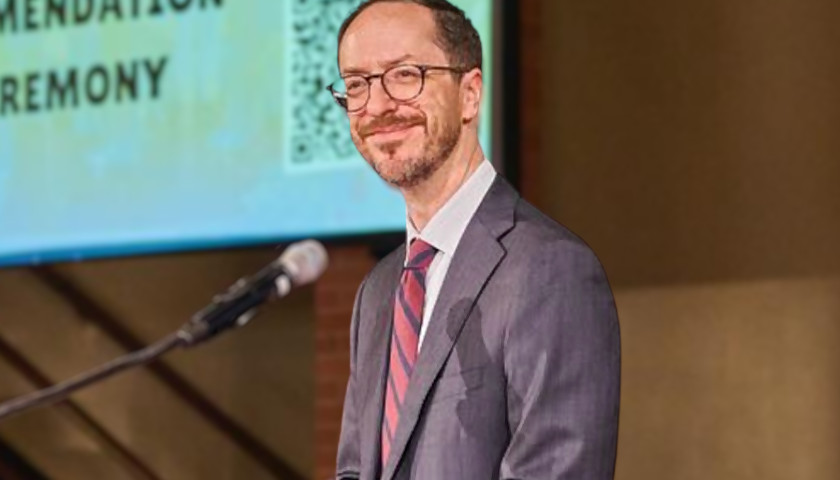
The segment featured an interview of Erez Reuveni, who was fired from the DOJ earlier this year for allegedly failing to appropriately defend the DHS from the lawsuit filed by Abrego Garcia, conducted by “60 Minutes” reporter Scott Pelley.
Though Pelley accurately described Reuveni’s 15 years at the DOJ, which saw him earn three awards for his work defending the federal government, the reporter neglected to include the critical description of Reuveni’s actions by his former DOJ supervisor, attorney August Flentje, who, in an April letter, appeared to suggest Reuveni succumbed to pressure after being promoted.
“Neither overall pressure or a misguided litigation strategy – if that is correct – excuses revealing internal disputes between DoJ and DHS relating to the litigation,” wrote Flentje, before adding that he recommended Reuveni receive “counseling” over his actions.
Pelley next allowed Reuveni to repeat his claim that an official appointed by President Donald Trump revealed a plan to defy a federal court order. Specifically, Reuveni restated his claim that U.S. Circuit Judge Emil Bove, who was then serving as a deputy associate attorney general for the Trump administration, revealed a plan to deport members of a Venezuelan terrorist gang, Tren de Aragua (TdA), using the Alien Enemies Act, even if a court attempted to block the flights.
As Reuveni related the events to Pelley, Bove’s remarks led another DOJ attorney, Drew Ensign, to claim in court that he did not know when the TdA members would be deported, which the ex-DOJ lawyer said amounted to defiance.
Bove has denied Reuveni’s version of events, while Flentje did not reference the meeting with Bove in his April letter to the DOJ Human Resources Division.
“My testimony is corroborated by a written statement from Mr. Reuveni’s immediate supervisor, submitted under penalty of perjury long before my nomination, in which the supervisor explained that I instructed DOJ attorneys to ‘avoid’ a court order and ‘do whatever we could properly do’ to accomplish that goal during the March 14, 2025 meeting,” said Bove in a written response to the U.S. Senate during his judicial confirmation process.
Obama-appointed U.S. District Court Judge James Boasberg issued a verbal restraining order demanding the government return the deportation flights on March 15, as the planes were already en route to El Salvador.
During the “60 Minutes” reporting, neither Pelley nor Reuveni acknowledged that the U.S. Supreme Court eventually vacated Boasberg’s order, or that the Trump administration has followed other court orders that heavily curtailed its use of the Alien Enemies Act, in apparent contradiction to Reuveni’s claim that the government is flouting court orders under Trump.
Pelley next included legal analysis from Peter Keisler, an attorney who previously worked under former President George W. Bush and former President Ronald Reagan.
Presenting him as an unbiased analyst, Pelley neglected to note that Keisler left the Republican Party over its affiliation with President Donald Trump, and in 2021 claimed in The Atlantic that Trump’s defense strategy at his second impeachment trial, which leaned heavily on the First Amendment, was invalid, by asserting that a president’s speech could be cause for impeachment.
More recently, Keisler said during an appearance on “The David Frum Show” that he has repeatedly voted for Democrats in recent elections.
“I voted for Hillary Clinton, for Joe Biden, and for Kamala Harris. You know, I was actually walking the streets in Pennsylvania this last year, knocking on doors for Kamala Harris,” said Keisler. “It’s not what I used to be doing to contribute to campaigns, and I certainly didn’t think I would be doing that in that setting for the Democratic candidate.”
Keisler was additionally involved with the legal effort against the Trump administration’s use of the Alien Enemies Act earlier this year.
Pelley next asked Reuveni about his refusal to engage with his superiors after he was asked to describe Abrego Garcia as a member of Mara Salvatrucha (MS-13), the Central American gang designated a foreign terrorist organization (FTO) by the Trump administration earlier this year.
Though Pelley did not challenge Reuveni when the ex-DOJ attorney claimed there is no evidence Abrego Garcia is affiliated with MS-13, a confidential informant (CI) in 2019 told authorities that Abrego Garcia was a member of MS-13’s Western Clique following his arrest, when he was allegedly wearing MS-13 clothing, and in the company of other gang members.
Though Abrego Garcia has never been adjudicated to be a member of the terrorist group, a federal immigration judge found the MS-13 claim credible, while a second judge found there to be no evidence contradicting the first judge’s finding. Abrego Garcia continues to deny any affiliation with MS-13.
Reuveni next suggested to Pelley that the terrorist designation could allow the Trump administration to claim American citizens are terrorists.
He did not note that FTO designations are a product of the Antiterrorism and Effective Death Penalty Act of 1996 (AEDPA), which amended the Immigration and Nationality Act (INA) to allow the U.S. Secretary of State to designate foreign entities as terrorist organizations under specific conditions. The USA PATRIOT Act of 2001 further expanded penalties for groups deemed FTOs.
Notably, organizations labeled FTOs have a 30-day window to appeal the decision to the U.S. Court of Appeals for the D.C. Circuit after the designation is publicly announced. Neither MS-13 nor TdA appealed their designation.
The State Department maintains a public list of designated FTOs, including organizations that have since had the designation removed. Among the earliest names included on the list are the Khmer Rouge, Hamas, al-Qaeda, and the Continuity Irish Republican Army.
Toward the end of the interview, Pelley reported Reuveni is now represented by the Government Accountability Project (GAP) in his federal whistleblower complaint against the Trump administration. Following his pattern of reporting, Pelley did not note that Reuveni, following his legal representation by GAP, received a Pillar Award from the Whistleblower Summit and Film Festival, which previously tapped GAP to present awards during its 2021 festival.
Though Pelley claimed in his “60 Minutes” segment that he requested interviews with the DOJ and members of the president’s cabinet before airing the interview with Reuveni, the broadcaster did not state whether CBS News or “60 Minutes” attempted to locate an expert who held a view critical to Reuveni’s claims.
Notably, the “60 Minutes” segment did not explain that Abrego Garcia has been subject to a final deportation order since 2019. The text of that order mandates that he cannot be deported to Guatemala, with the judge claiming that Abrego Garcia’s family had relocated from El Salvador to the neighboring nation, but remained subject to threats by another Central American gang. A judge recently upheld this order.
Reuveni did not raise this issue while employed at the DOJ, and was not pressed on the decision by Pelley.
The segment aired just weeks after Bari Weiss became the new editor-in-chief at CBS News, and only three days after Weiss was reported by The New York Post to have claimed a “woke” news standards chief as her “first scalp” as she seeks to pivot the network’s political direction away from the left and back toward the center.
Pelley’s “60 Minutes” segment with Reuveni appears to violate at least two of the 10 principles of journalism reportedly outlined by Weiss to CBS News employees after she entered the editor-in-chief position.
According to Axios, the new executive, “told employees that the principles that will guide her leadership reflect the same core values that she’s always used to guide her journalism.”
Weiss’ sixth principle states a desire to create, “Journalism that holds both American political parties to equal scrutiny.”
The seventh mandates, “Journalism that embraces a wide spectrum of views and voices so that the audience can contend with the best arguments on all sides of a debate.”
Paramount Global and CBS additionally agreed to pay Trump $16 million in July to settle the president’s lawsuit over the decision by “60 Minutes” to deceptively edit answers by former Vice President Kamala Harris during the 2024 presidential election.
The Tennessee Star first reported in April that Abrego Garcia was stopped by the Tennessee Highway Patrol (THP) in November 2022, while a DHS document later showed that troopers suspected human trafficking. A spokesman for THP later told The Star that the “Biden-era FBI” instructed troopers to release him.
Less than two months after The Star reported Abrego Garcia’s encounter with Tennessee law enforcement, U.S. Attorney General Pam Bondi unsealed the federal indictment, which accused him of participating in a human smuggling conspiracy for nearly a decade.
The indictment was cited by the Trump administration in its negotiations with President Nayib Bukele of El Salvador, who agreed to release the citizen of his nation from confinement so that Abrego Garcia might face the federal charges in Tennessee.
Abrego Garcia has pleaded not guilty. His trial is currently scheduled for January 2026.
Watch the full segment of “60 Minutes”:
– – –
Tom Pappert is the lead reporter for The Tennessee Star, and also reports for The Pennsylvania Daily Star and The Arizona Sun Times. Follow Tom on X/Twitter. Email tips to [email protected].
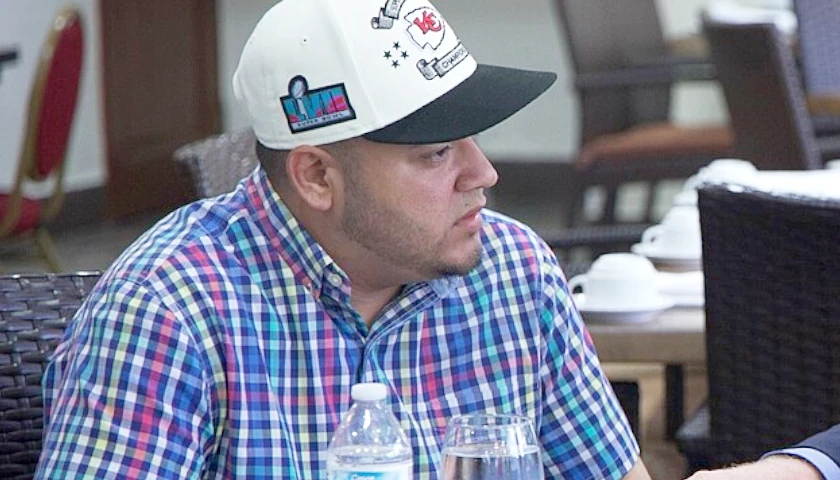
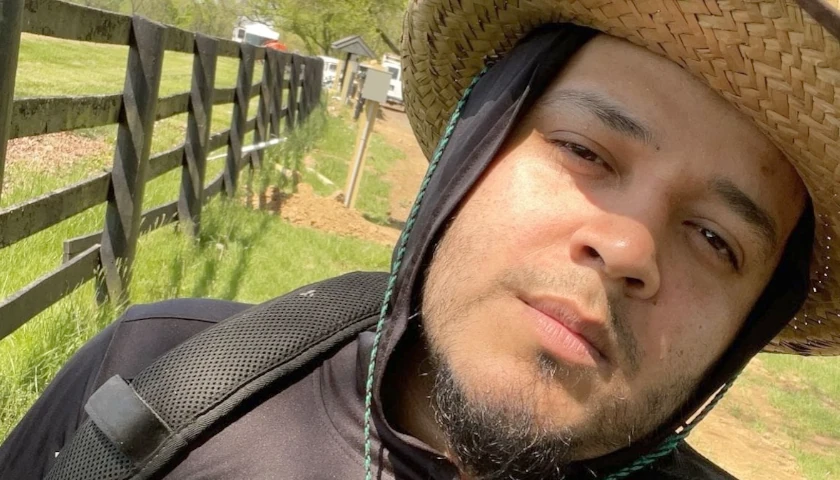
Photo “Kilmar Abrego Garcia” by Murray Osorio PLLC.