
by Jason Hopkins
The Trump administration is creating a first-of-its-kind task force aimed at ushering in a new “Golden Age” of beautiful infrastructure across the U.S.
The Department of Transportation (DOT) will announce the establishment of the Beautifying Transportation Infrastructure Council (BTIC) on Thursday, the Daily Caller News Foundation exclusively learned. The BTIC seeks to advise Transportation Secretary Sean Duffy on design and policy ideas for key infrastructure projects, including highways, bridges and transit hubs.
“What happened to our country’s proud tradition of building great, big, beautiful things?” Duffy said in a statement shared with the DCNF. “It’s time the design for America’s latest infrastructure projects reflects our nation’s strength, pride, and promise.”
 “We’re engaging the best and brightest minds in architectural design and engineering to make beautiful structures that move you and bring about a new Golden Age of Transportation,” Duffy continued.
Mini scoop – here is the DOT’s rollout of its Beautifying Transportation Infrastructure Council, which will be tasked with making our buildings beautiful again. pic.twitter.com/9iV2xSxdJM
— Jason Hopkins (@jasonhopkinsdc) October 23, 2025
The DOT is encouraging nominations of the country’s best architects, urban planners, artists and others to serve on the council, according to the department. While ensuring that efficiency and safety remain a top priority, the BTIC will provide guidance on projects that “enhance” public areas and develop aesthetic performance metrics.
The new council aligns with an executive order signed by President Donald Trump in August 2025 regarding infrastructure. The “Making Federal Architecture Beautiful Again” order calls for federal public buildings in the country to “respect regional architectural heritage” and aims to prevent federal construction projects from using modernist and brutalist architecture styles, instead returning to a classical style.
Brutalist architecture emerged in the post-war era, characterized by raw, exposed concrete, massive geometric forms, and an unapologetic emphasis on materials and structure. These buildings — often institutional or public-housing types — have been described as “grim and inhuman,” evoking fortress-like or prison-style images. The J. Edgar Hoover Building, the FBI’s Washington headquarters, stands as an infamous example of the movement’s shortcomings: long derided for its bunker-like appearance and now plagued by crumbling facades and falling debris, it’s slated for replacement after decades of maintenance woes.
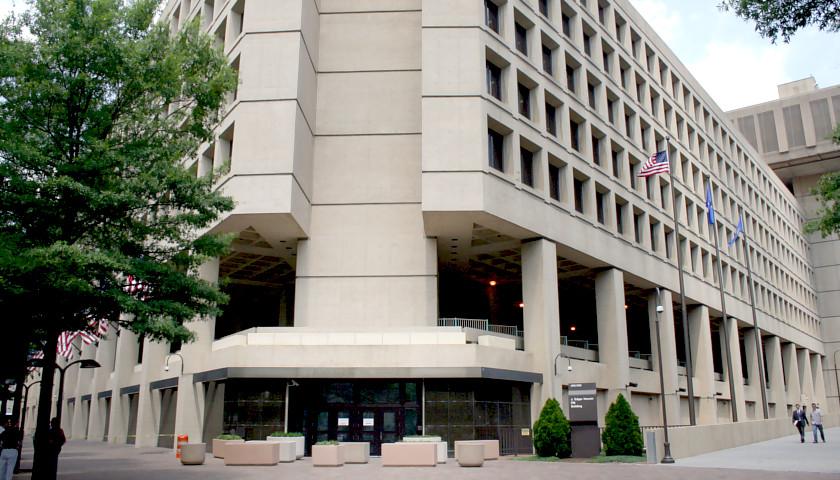
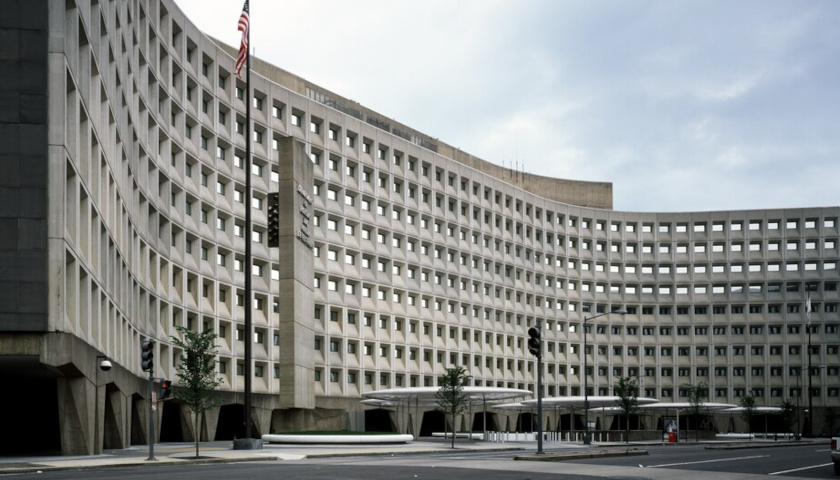
After the dusk of that short-lived mid-century experiment in the late 1970s, Modernist architecture swept cityscapes with its finished-concrete-steel-and-glass facades and flat, plinth-like forms. Following the mantra “form follows function,” it prioritized minimalism and abstraction over ornament or local tradition. While it opened new architectural possibilities, many critics say it neglected the symbolic and emotional needs of people and communities.
By contrast, classical architecture emphasizes symmetry, proportion, columns, and reference to historic traditions — ideas embraced in the executive order’s call to “respect regional architectural heritage.” Classical forms aim to inspire civic virtue and continuity, serving as visual anchors in the built environment rather than blank slates.
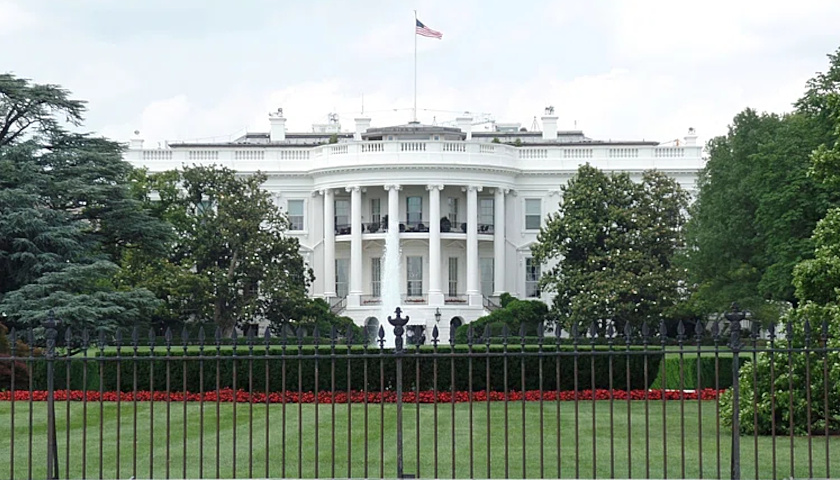
“The Founders, in line with great societies before them, attached great importance to Federal civic architecture,” Trump’s order stated. “They wanted America’s public buildings to inspire the American people and encourage civic virtue.”
“President George Washington and Secretary of State Thomas Jefferson consciously modeled the most important buildings in Washington, D.C., on the classical architecture of ancient Athens and Rome,” the order continued. “Because of their proven ability to meet these requirements, classical and traditional architecture are preferred modes of architectural design.”
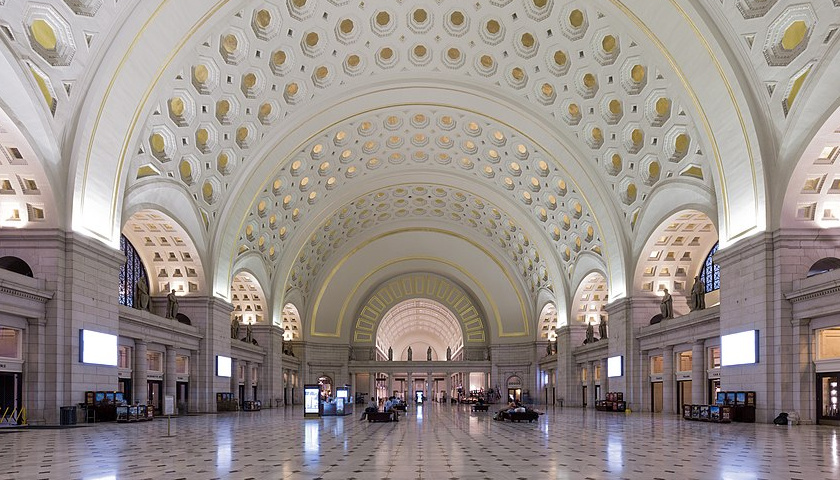
The DOT invested millions in major infrastructure projects since Trump’s return to the White House. Duffy announced in August a $43 million transformation initiative of the New York Penn Station in New York City and in September unveiled major progress in the rehabilitation and modernization of Washington Union Station in Washington, D.C.
The BTIC will comprise up to 11 members who will serve two-year terms, with the chance to be reappointed, according to the DOT. The task force will meet biannually. The deadline for nominations will end Nov. 21.
– – –
Jason Hopkins is a reporter at Daily Caller News Foundation. Christina Botteri, the Executive Editor of The Tennessee Star and The Star News Network, contributed to this report.
Photo “Great Hall, Union Station” by Martin Kraft CCSA4.0.

.jpg)