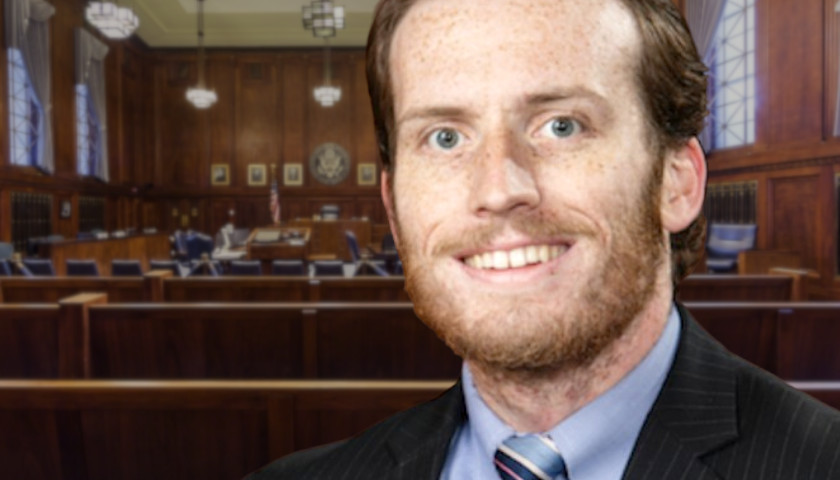

EJ Haust, a self-described political refugee from Minnesota, is raising concerns about the state’s upcoming ethnic studies mandate, arguing it shifts education toward activism and ideological instruction.
Beginning later this year, all K-12 public schools in Minnesota will be required to incorporate ethnic studies into social studies curricula, organized around themes of identity, resistance, and ways of knowing.
While supporters say the standards aim to expand cultural understanding, critics like Haust say they go much further. Speaking on Tuesday’s edition of The Michael Patrick Leahy Show, she characterized the curriculum as politically driven.
“It’s activism 101,” Haust said.
The mandate stems from legislation passed in 2023 that requires all students to engage with these frameworks throughout their education. Critics point in particular to the “resistance” component, which includes examining protest movements and civic action.
Haust argued that the approach crosses into the realm of moral and ideological influence.
“That’s the scariest part…They’re trying to instill their moral thought processes, their ethos on kids,” she said. “Which is really the job of your church and your parents and your faith. So they’re trying to take the place of the church and the parents and the guidance of these children.”
She emphasized that students are still developing and may not be equipped to process such material.
“Remember, even high school kids are still kids,” Haust said. “And they’re still developing those brains, and they want to indoctrinate them into their ethos and into their moral authority, which is not right at all. It sounds culty.”
The Minnesota Department of Education maintains that ethnic studies are intended to broaden students’ perspectives and deepen their understanding of history and society. However, Haust questioned both the content and the motivations behind it.
“I wanna know who’s funding it,” she said. “The push to do this came from somebody… something’s going on there.”
Haust also raised concerns about the absence of the concept of assimilation from the standards.
“They integrated into the American culture and society,” she said of past immigrant groups. “We have to start being okay with saying, ‘Hey, Western way of life is awesome.’ We have to promote that for being as great as it is. There’s nothing wrong with that, and it’s not a matter of the color of your skin or the country of origin of your parents or whatever. It’s a way of life.”
Haust added that, in her view, schools should instead emphasize foundational civic principles when teaching students how to function in society.
“But if they were truly trying to teach what makes a good human and how we should act as a society… tell me where the Bill of Rights isn’t the best way to do that,” Haust said. “Yes, it’s based on biblical principles, but for the most part it’s just be a good person…Just go do good things.”
Haust ultimately argued that the mandate crosses a fundamental line in public education.
“I think it’s immoral to put this in the public school system,” she said.
Tune in now to The Michael Patrick Leahy Show – your AMERICA FIRST news talk!
– Watch LIVE here on X
– Watch LIVE on YouTube / Rumble / Roku / AppleTV
– Listen on Spotify
– Listen on WENO AM760 in Nashville
– Read more at @TheTNStarhttps://t.co/XWls73dK45— Michael Patrick Leahy (@michaelpleahy) March 24, 2026
– – –
Kaitlin Housler is a reporter at The Tennessee Star and The Star News Network. Follow Kaitlin on X / Twitter.