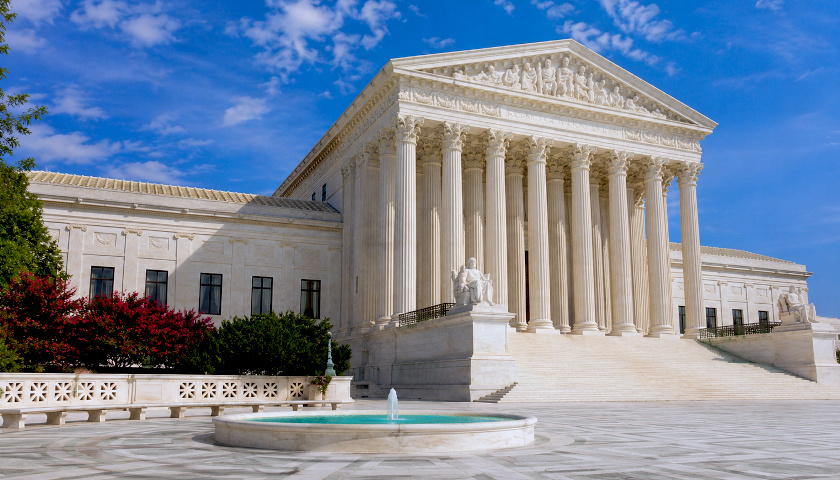
In a procedural victory for the Trump administration, the U.S. Supreme Court on Tuesday issued a unanimous, unsigned decision, reversing a lower court ruling that revived a First Amendment lawsuit by the National Association of Immigration Judges (NAIJ) challenging an Executive Office for Immigration Review (EOIR) policy requiring prior approval for public speeches and writings related to their official duties.
The Court held that the Fourth Circuit violated the principle of party presentation by remanding the case for fact-finding on an issue neither party had raised: whether recent changes to the Civil Service Reform Act’s (CSRA) administrative review bodies (the Merit Systems Protection Board and Office of Special Counsel) meant the statutory scheme no longer channeled such claims away from federal district court.
“Federal courts are not ‘roving commissions,’” the court wrote, “licensed to ‘sally forth each day looking for wrongs to right.’”
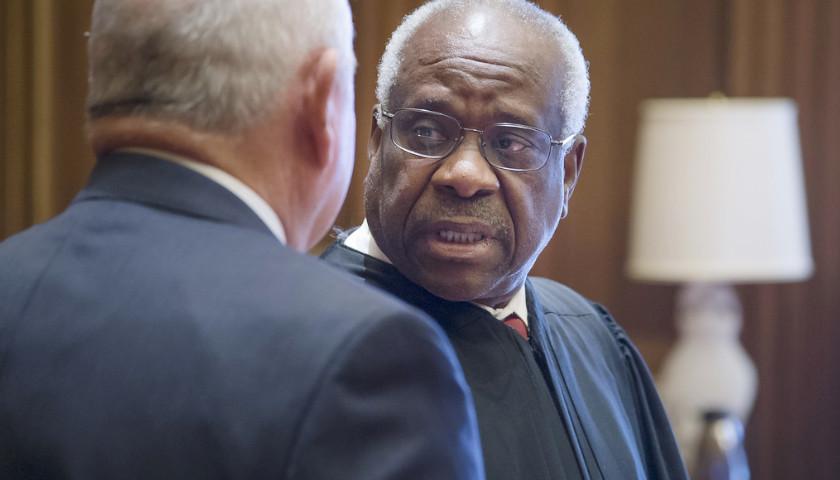
In a 3-page concurring opinion, Justice Clarence Thomas (pictured here), joined by Justice Amy Coney Barrett, wrote separately to emphasize the merits. Thomas wrote that the Fourth Circuit’s approach improperly allowed “new political considerations” to alter statutory interpretation: “Conditions may have changed, but the statute has not.” Courts cannot rewrite the CSRA based on executive actions or public records, he argued.
The case centers on a 2021 EOIR policy that defines “official speech” broadly and requires multi-level supervisory, policy, general counsel, and ethics review before approval. Judges seeking to speak or write in a personal capacity on unrelated topics face fewer restrictions but are encouraged to consult ethics officials. This includes engagements where a judge is invited because of their position or expected to discuss agency policies, programs, or immigration matters.
NAIJ, representing hundreds of the roughly 750 immigration judges who adjudicate removal, asylum, and other cases, argued the policy chills speech on matters of public concern, and leads to constructive denials through delays or required alignment with agency “talking points.” Examples in court filings included delayed or edited articles and lost teaching opportunities.
A federal district court in Virginia initially dismissed the suit, ruling that the CSRA requires such workplace grievances to go through administrative channels rather than direct federal court litigation. The Fourth Circuit agreed the claims were “covered” by the CSRA but vacated and remanded for the district court to assess whether firings and quorum issues at the MSPB and Special Counsel had undermined the scheme’s functionality as Congress intended, potentially restoring district court jurisdiction.
The Supreme Court reversed the lower court’s ruling without reaching the underlying First Amendment merits or the broader CSRA channeling questions. “The petition for a writ of certiorari is granted, the judgment of the Fourth Circuit is reversed, and the case is remanded for further proceedings consistent with this opinion,” the Court concluded.
“The restrictions on immigration judges’ free speech rights are unconstitutional and it’s intolerable that this prior restraint is still in place,” Knight First Amendment Institute attorney Ramya Krishnan said in a statement about the ruling.
– – –
Christina Botteri is the Executive Editor of The Tennessee Star and The Star News Network. Follow her on X at @christinakb.