
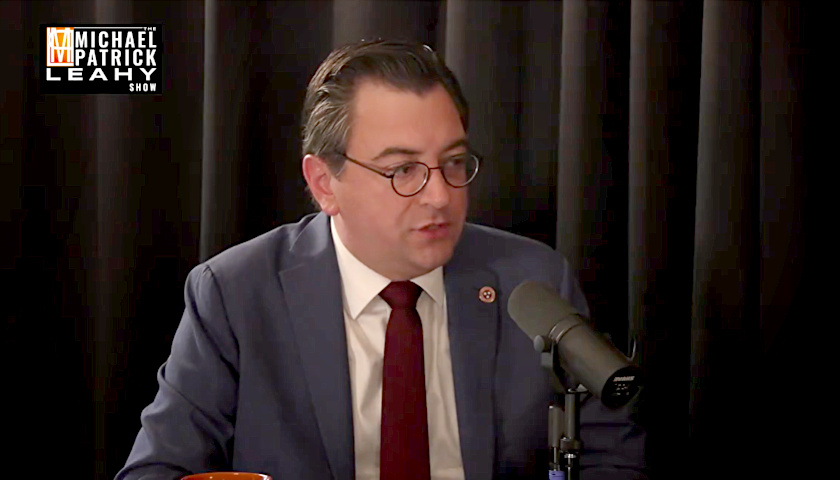
Tennessee Attorney General Jonathan Skrmetti weighed in on a report that accommodations were made for students during the Muslim holy month of Ramadan at John Overton High School, suggesting the situation may raise constitutional concerns depending on the level of school involvement.
During an exclusive sit down interview with The Tennessee Star’s CEO and Editor-in-Chief Michael Patrick Leahy, Skrmetti addressed reports that students were allowed to leave class for daily Muslim prayers during Ramadan and that school resources may have been used to facilitate the practice.
“So there are a number of potential avenues there,” Skrmetti said during Tuesday’s edition of The Michael Patrick Leahy Show. “The basic civil rights laws that apply to education don’t cover religious discrimination. So there may be some other state laws we’ll find out but it fundamentally goes to the difference between the establishment clause and the free exercise clause.”
Skrmetti emphasized the constitutional balance between protecting religious expression and avoiding government endorsement of religion.
“Free exercise says the government can’t stop you from practicing your religion,” he explained. “The establishment clause as interpreted, and as we hear about every time the legislature tries to do anything these days, says that the state can’t – it says something different, but it’s been interpreted to mean the state can’t participate in promoting particular religious viewpoints.”
The attorney general noted that the key legal distinction may hinge on who organized and facilitated the activities.
“So if the school is dedicating resources to something, that’s a very different situation than if the students are self-organizing,” Skrmetti stressed.
Skrmetti’s remarks come after reports that more than 80 students were permitted to leave class for daily prayer sessions during Ramadan, with additional accommodations supported by school staff including access to designated prayer spaces and “food-free” classrooms during lunch for students who were fasting.
Leahy raised concerns during Tuesday’s interview about the potential impact on other students, particularly those who do not share the same religious beliefs.
“I look at it as an attempt to propagandize and proselytize [non-Muslim] students. That’s my view,” Leahy said.
Skrmetti indicated the issue is likely to receive further scrutiny.
“I expect that we’ll be hearing more about it one way or another,” Skrmetti said.
🚨BREAKING – I asked @AGTennessee Skrmetti today if the MNPS decision to allow Muslim prayers during school hours in a dedicated room led by an MNPS employee at Overton High School coerces non-Muslim students and violates the Religious Establishment Clause of the First Amendment. pic.twitter.com/LhaaXAwEgL
— Michael Patrick Leahy (@michaelpleahy) April 14, 2026
– – –
Kaitlin Housler is a reporter at The Tennessee Star and The Star News Network. Follow Kaitlin on X / Twitter.
What you do for one group you have to do for the other, so this practice needs to end totally in our school system.